When You Are Old
The poem does not swear devotion at youth’s brightest moment. It carries the listener to old age beside the fire, then looks back at those who loved beauty and the one who loved the pilgrim soul. This site preserves the route as a complete 4:39 song and film, a Suno work and a verified YouTube link.
Only from old age can the promise reveal its weight
Yeats turns the future tense into an emotional device. From the first line, the reader stands in drowsy age with grey hair; youth is no longer an eternal present but a past recalled by book and firelight. The poem distinguishes love of beauty from love of the ‘pilgrim soul,’ while admitting that the latter may depart and hide among the stars. It offers no completed possession, and that lack of possession gives devotion its longer echo.
Four minutes and thirty-nine seconds of tenderness without sentimentality
The complete version takes a long-breathed, cinematic male-vocal route. The singer does not rush sorrow toward a peak; sentences turn like pages in an old book. A cross-cultural film quality enters the melody while the stress pattern of the English poem remains audible. Most importantly, the ending refuses a monumental climax that would decide the listener’s feelings. It leaves space around the unprovable and irreversible act of having loved another person’s soul.
Firelight, old books and silver hair must not become a filter
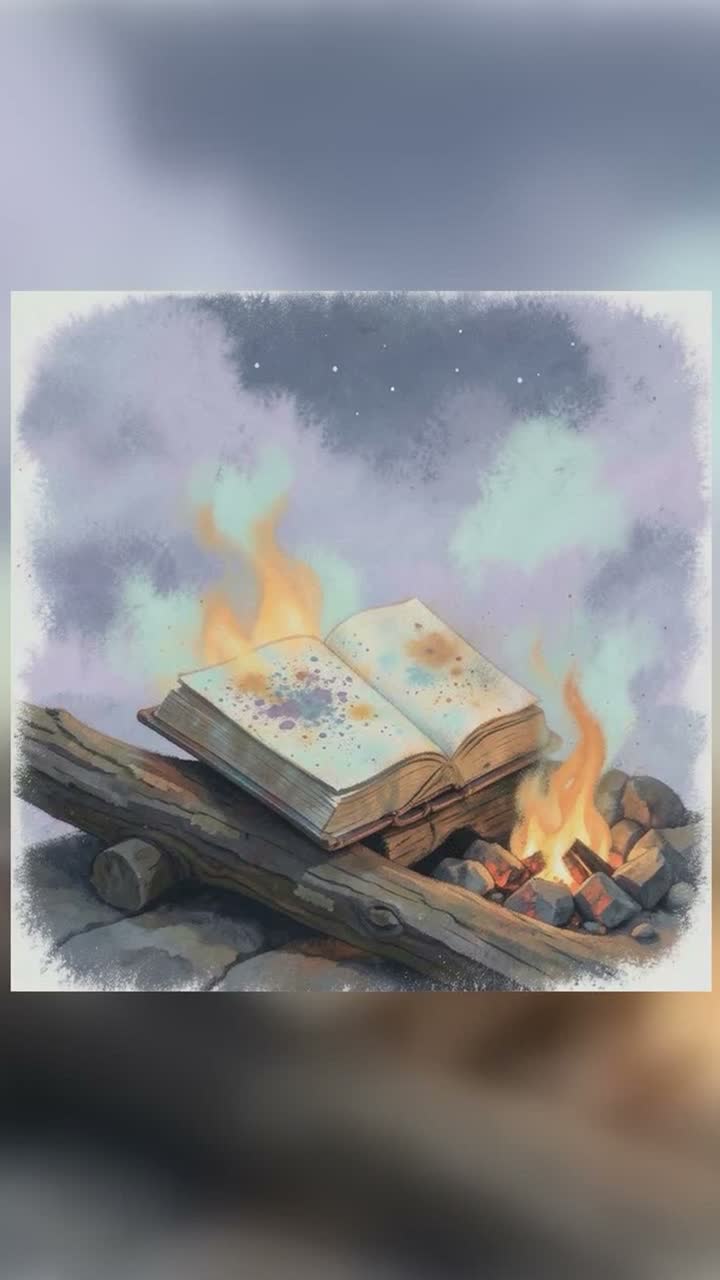
The complete film can use firelight and the texture of age without relying on soft focus to signify oldness. What matters is how a hand turns a page, how the eyes stop at a line and how a room preserves traces of another person. Youth need not be reconstructed as a complete flashback with matching actors; fragments behave more truthfully as memory. When the final image moves from room to night sky, stars are not decoration but the distance of a love that has gone and can still be seen.
An English-poetry doorway and a shared emotional language
Chinese listeners already carry a familiar emotional doorway through the phrase ‘when you are old,’ yet this version keeps the song in English so that Yeats’s linguistic origin is not erased. South Asian cinematic colour, English verse and Chinese editorial framing meet in one path. The result is not anonymous ‘world style’; each layer declares where it comes from. Complete playback matters especially here, because a song about time only becomes itself when the listener can reach the final tone.
Songs in this story (1)
One after another, back to the top at the end — until you stop it. Tap any song to carry on from there.
- 1When You Are OldThe song does not swear devotion at youth’s brightest moment. It begins beside tMV