Moon over Mount Emei
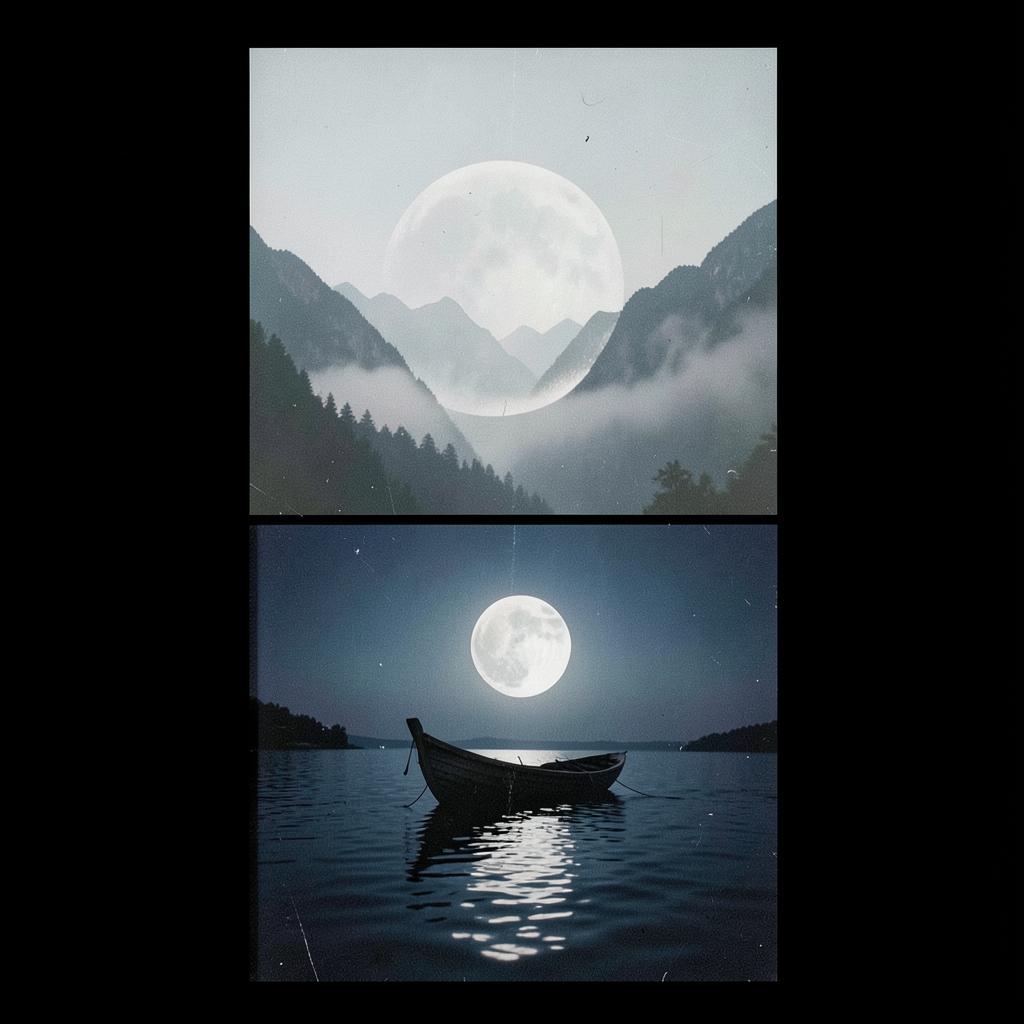
The moon is not a still object above a mountain but a companion travelling beside the boat. Place-names move steadily forward while moonlight remains, allowing the clarity of a young journey and the sadness of leaving home to occur at the same time.
Five place-names turn a short poem into a real water route
Emei, Pingqiang, Qingxi, the Three Gorges and Yuzhou are not a geography lesson. They mark the boat’s speed and the expansion of space. The poet is leaving familiar landscape; every new name carries the future, while the moon recalls someone absent from the journey. A song concerned only with classical moonlight would miss the poem’s modern feeling: a young person placing home behind him for the first time.
Dai Amei offers a clear water-like voice without claiming ethnic authenticity
One Suno work under the same title is mapped to the creative persona Dai Amei. It is a verifiable virtual-singer version, not an authoritative representation of any living ethnic tradition. Flowing pulse, light strings and bamboo colour may suggest river travel, while the melody respects the poem’s compression and place-name stresses. With no matching complete on-site master, the page links the real work without rendering a player.
Moonlight should travel with the boat; subtitles should breathe with place
The film can begin with an incomplete autumn moon reflected on water. Each place changes terrain and sound slightly. One generic Chinese-landscape loop cannot carry the whole song, and the poet need not remain at the centre of every frame. Shoreline, boat edge, distant lamps and an unseen home should compose the journey. Subtitles need pauses around the place-names so that viewers feel actual distance.
Introduce Tang poetry as travel, not as a cultural examination
International listeners need not memorize every place-name before feeling the poem. The English doorway can clarify the route and preserve the openness of the absent ‘you,’ while the Chinese original remains the sonic centre. The most effective cultural entrance is the experience of a first long journey: scenery keeps changing outside, yet one moon continually draws the traveller back toward the point of departure.
Songs in this story (1)
One after another, back to the top at the end — until you stop it. Tap any song to carry on from there.
- 1Moon over Mount EmeiAn autumn half-moon enters the Pingqiang River from Emei, then travels through Q