After New Rain in the Empty Mountains
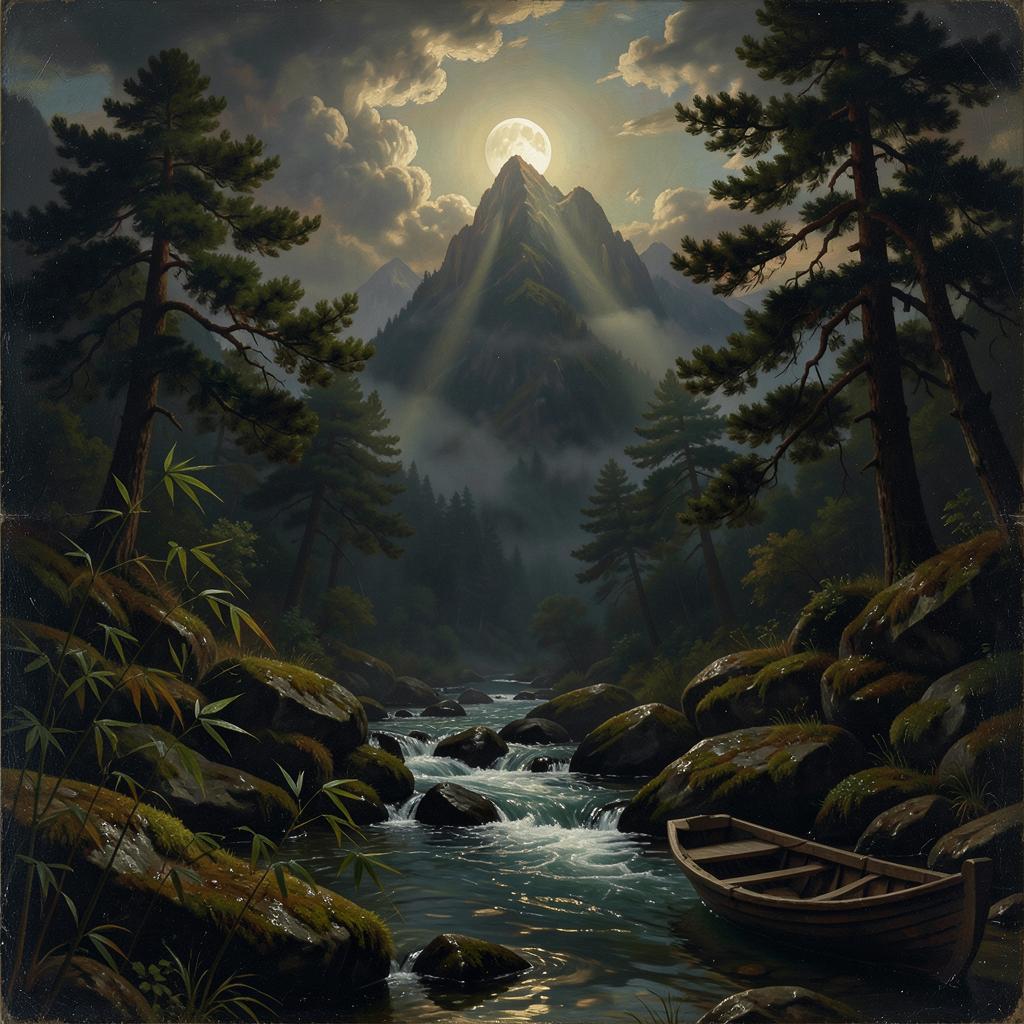
Wang Wei’s empty mountain is not a world without people. Noise has receded, allowing moon, pine, spring water, bamboo and returning life to recover their proportion. The musical challenge is not how many Chinese instruments to add, but whether the arrangement can leave enough room for quiet.
The mountain evening lives in movement between stillness and sound
New rain clears the air, moonlight passes through pines and water moves across stone. Bamboo then sounds as washerwomen return, and lotus leaves stir around a fishing boat. People are not excluded from nature; work and homecoming enter the clear landscape. Reading emptiness as absence loses the poem’s tenderness: after the world quiets, ordinary life continues.
One real work enters through clarity rather than vague Zen atmosphere
One Dai Amei catalogue version is mapped, again as a virtual-voice experiment rather than a substitute for any ethnic tradition. The arrangement makes post-rain air audible through restrained percussion, loose plucked tones and phrases moving like water over stone, introducing warmer human response later. A 3:27 complete MP3 and full source-lyric film now match the exact work, so the page opens playback while separately accounting for Wang Wei's eight source lines, five verbatim reprises and nine recomposed or contemporary lines.
Visual space means each shot performs one task
The film may begin at the moment rain stops without immediately presenting moon, pine, spring and bamboo together. One shot listens to water; another watches pine shadow. Only after the rhythm is established do moving bamboo and distant returners appear. Colour should travel from wet coolness toward warmth rather than remain inside one blue-green filter. Subtitles must be restrained so original text and environmental sound can breathe in turn.
Let listeners inhabit the mountain before explaining poetic philosophy
An English essay may explain Wang Wei’s painterly poetic imagination without defining the poem immediately through Zen. Let listeners first hear post-rain air, moon among pines and people returning; philosophy can grow from sensory particulars. Cultural exchange does not mean turning the empty mountain into generic ambient music. It means letting people in different languages recognize that quiet is not escape but renewed attention to life.
Songs in this story (1)
One after another, back to the top at the end — until you stop it. Tap any song to carry on from there.
- 1After New Rain in the Empty MountainsNew rain, moon among pines, water over stone, returning washerwomen and a fishin