Three Poems on the Handkerchief
After Baoyu is beaten, he asks Qingwen to carry old handkerchiefs to Daiyu. She understands the unspoken care and, while ill, writes three poems upon them. Love here has no public declaration—only a used everyday object, feeling that cannot be openly stated and the impulse to turn tears into writing.
The handkerchief moves because it is not a precious gift
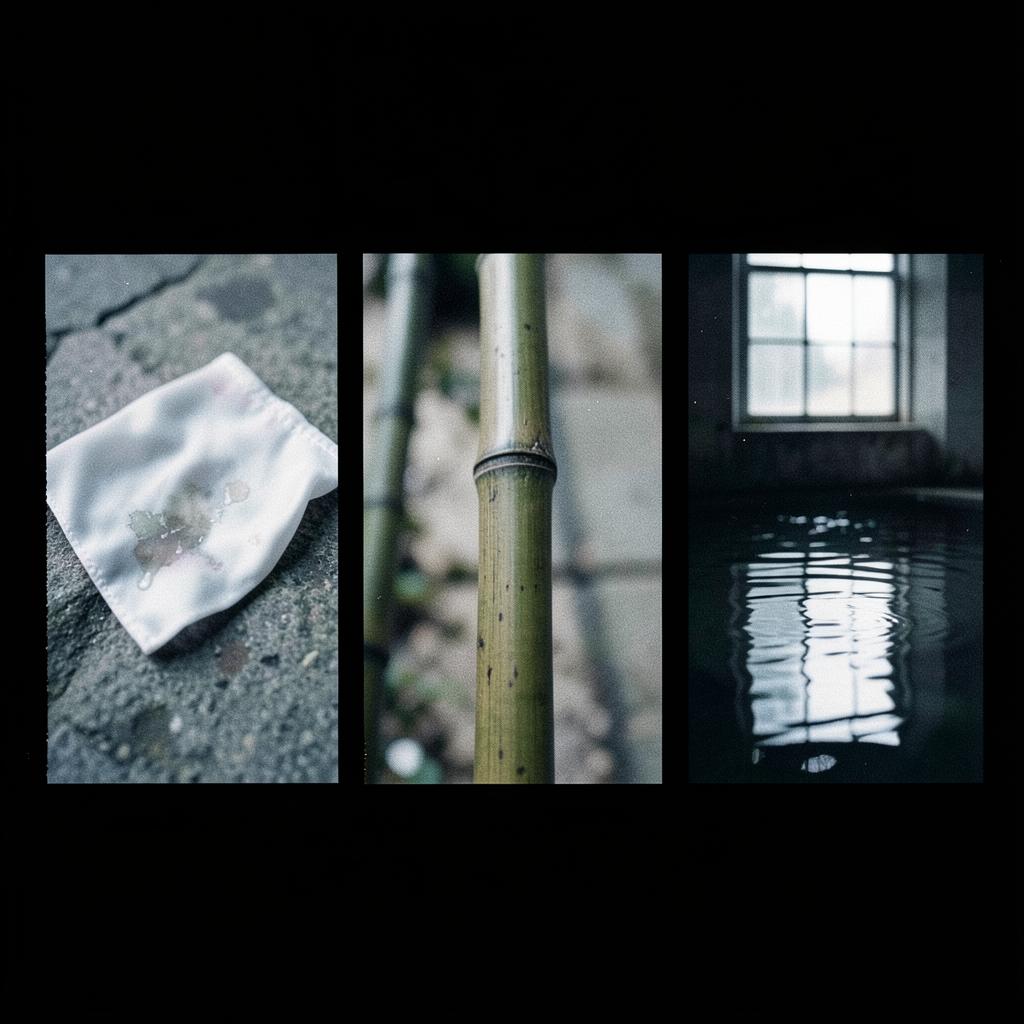
Baoyu sends no jewel, only cloth he has used. Qingwen initially finds the gesture obscure, while Daiyu recognizes a meaning the two lovers can confirm without public speech. The object carries body, tears and ordinary contact; because it does not fit formal exchange, it travels in secrecy. Daiyu’s poems are not decorative accomplishment. Feeling suddenly discovers a surface on which it can land: the handkerchief absorbs tears and preserves words.
The song must remain close enough to feel whispered
The complete 3:27 setting keeps its scale intimate. A nearby female voice bears the poems, tears and tremor of illness, while a male voice answers only from a distance, like a reply that never arrived. The three poems become three deepening states—uncertainty, recognition, then feeling that cannot be withdrawn. The climax never expands into palace tragedy; it remains with the room, old cloth and the tremor of writing. Formal character names for the two voices remain open.
Hands, ink and tears matter more than the whole garden
The film may remain almost entirely within an interior resembling the Bamboo Lodge. Qingwen’s delivery is only the prelude; the centre is Daiyu thinking after receiving the cloth: fingers stopping on its weave, candlelight moving with breath, ink blurred by tears and writing resumed. The closer the camera, the clearer this wordless love becomes. When the handkerchief is folded and kept, the secret is still not public, but it now has a form that cannot be erased.
A small handkerchief can open the whole Baoyu–Daiyu bond
For a first encounter with Dream of the Red Chamber, this episode may offer a better doorway than a grand synopsis. One person is injured, another worries; direct meeting is constrained, so an old handkerchief carries the visit and poetry carries the confession. Context can then explain Qingwen as messenger, rules of propriety and Daiyu’s poetic intelligence. Three Poems on the Handkerchief preserves action and number while keeping the Chinese title visible at the centre of the page.
Songs in this story (1)
One after another, back to the top at the end — until you stop it. Tap any song to carry on from there.
- 1Three Verses on the Handkerchief · Lament of EmptinessA single handkerchief carries what cannot be spoken openly. The female lead keep