WEIYANG SOUND · 未央声场
长亭送别·昆曲灵婉
碧云、黄花、西风、南雁没有站在人物身后做秋景;它们一起把莺莺说不出口的挽留扩到天地。灵婉不把离别唱成哭喊,而让每个尾音慢慢松手。
灵婉 · 中文演唱 · 繁体原词字幕 · 2:20 · 完整播放
Farewell at the Long Pavilion · Lingwan
王实甫《西厢记·长亭送别》· 02A · 灵婉
作品说明
完整听灵婉《长亭送别》:2:20 昆曲风味元曲新唱与完整竖屏歌词影像。精确 02A Suno 作品、灵婉归属、原词、封面和时间戳均已核实;水磨、念白与散板是当代声线实验,不冒充专业昆曲舞台复原。
Work note
Hear Lingwan's Farewell at the Long Pavilion in full: a 2:20 Kunqu-inflected setting of Wang Shifu with complete vertical lyric film. The exact 02A Suno work, singer attribution, source text, artwork and timestamp are verified; the recording is a contemporary vocal experiment, not a reconstruction of professional Kunqu theatre.
01 · THE DRAMA INSIDE AUTUMN
“总是离人泪”把秋色翻过来:不是景在醉,是人正在失去
作品使用王实甫《西厢记·长亭送别》的经典曲词:从“碧云天,黄花地”到“晓来谁染霜林醉?总是离人泪”,再进入“恨相见得迟,怨归去得疾”。天空、黄花、西风、南飞雁与霜林并非古典装饰,而是莺莺无法决定离别进程时被放大的情绪。歌曲保留“十里长亭”“松了金钏”“减了玉肌”等身体尺度,没有把这场由礼法、功名和距离共同造成的分离改成普通失恋歌。它选唱场景中的核心曲词,不声称替代整部《西厢记》或完整舞台折子。
‘Always the tears of those who part’ reverses the autumn scene: the landscape is not drunk, a person is losing someone
The work uses the celebrated farewell text from Wang Shifu's Romance of the Western Chamber: blue-green sky, yellow flowers and southbound geese lead to the question of who stained the frosted woods, answered by the tears of those who part, before the lyric turns to meeting too late and leaving too quickly. Sky, wind and forest are not decorative Chineseness; they enlarge Yingying's limited power over a separation shaped by propriety, examination ambition and distance. The song retains the bodily scale of loosened bracelets, lost flesh and the ten-li pavilion. It selects a central lyric passage and does not claim to replace the full drama or a complete stage scene.
02 · WATER-POLISHED, NOT STAGE-CLAIMED
水磨、念白、散板与慢板是编曲方法,不是“正宗昆曲”认证
公开来源标签明确要求 Traditional Kunqu-style Yuan drama aria、Lingwan delicate female voice、water-polished singing、念白转入歌唱、散板开篇与慢板,并列出曲笛、琵琶、古琴、拍板和极轻锣点;同时明确不要现代流行节拍、EDM、说唱和重鼓。这些参数说明作品有意识地向昆曲的圆润拖腔与元曲戏剧情境靠近,也说明它仍是 AI 辅助的当代新唱。灵婉是持续虚拟歌手,不是职业昆曲演员;页面不把生成声线、乐器提示或繁体字幕冒充师承、行当、舞台身段与现场演出。
Water-polished phrasing, recitative and free rhythm are arrangement methods—not certification as authentic Kunqu
The public source tags explicitly request a traditional Kunqu-style Yuan-drama aria, Lingwan's delicate female voice, water-polished singing, spoken recitative moving into song, a free-rhythm opening and slow ban. Qudi, pipa, guqin, paiban and very light gong cues are named, while modern pop beat, EDM, rap and loud drums are excluded. Those choices show a deliberate approach toward rounded Kunqu-inflected phrasing and Yuan-drama atmosphere, while the work remains a contemporary AI-assisted setting. Lingwan is a continuing virtual singer, not a trained Kunqu performer, and generated timbre, instrument prompts or traditional-character captions are not presented as lineage, role type, stage movement or live performance.
03 · ONE VOICE, THREE VERIFIED ROUTES
三件《长亭送别》作品并存;灵婉 01A / 02A 已成为可完整对照的同词双版本
同步曲库把这场离别连接到三件真实 Suno 作品:林居怡的昆曲路线,以及灵婉 01A 元曲叙事抒情与 02A 昆曲风味路线。多版本不是重复垃圾,而是比较人物距离的证据:林居怡可以把命运压力推近,灵婉则在同一 Persona 内让相同二十二行文字经历两套速度与句尾。本站现已完整接回 3:02 的 01A 和 2:20 的 02A;两者提示词/唱词哈希完全相同,标签和三项媒体哈希全部不同。林居怡路线继续保留真实来源链接;两套完整母带也不被夸写成整套元曲计划已经完成。
Three Long Pavilion works coexist; Lingwan 01A / 02A now form a complete same-text comparison
The synchronized catalogue links this farewell to three real Suno works: a Kunqu-inflected Lin Juyi route, plus Lingwan's Yuan-drama narrative-ballad 01A and Kunqu-inflected 02A. Multiple versions are evidence for comparing character distance rather than disposable duplication. Lin Juyi can bring the pressure of fate forward, while one Lingwan Persona lets the same twenty-two lines experience two tempos and kinds of ending. The site now carries both the complete 3:02 01A and 2:20 02A. Their prompt and lyric hashes match exactly; tag and all three media hashes differ. The Lin Juyi route retains its real source link, and two complete masters do not pretend to finish the wider Yuan-drama programme.
04 · THE COMPLETE SOURCE FILM
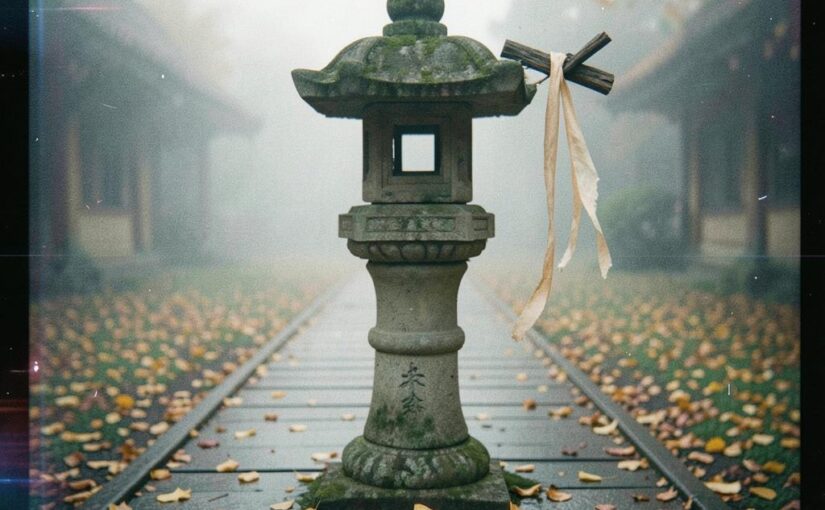
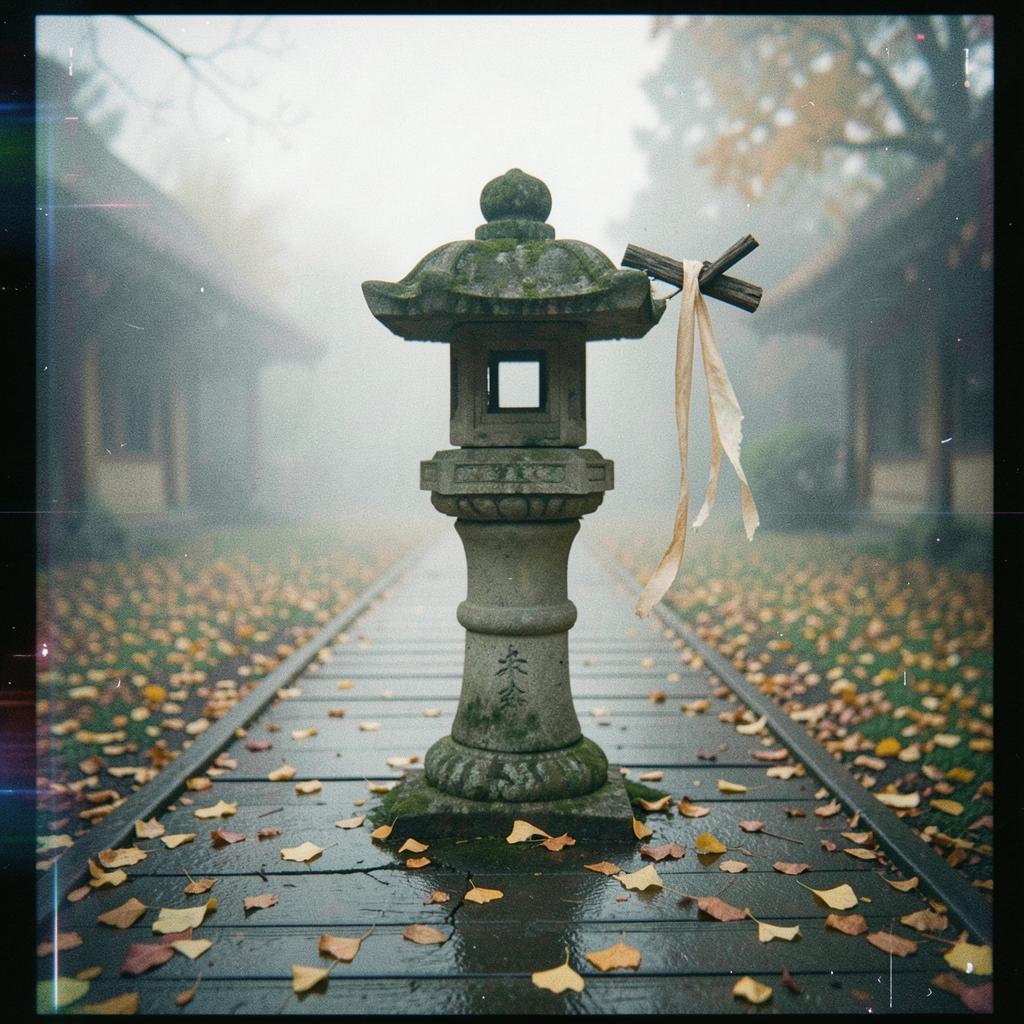
石灯、湿路与一条褪色丝带守完整首歌;这不是长亭实拍或昆曲舞台录像
本站完整解码 2:20 音频与影片,并抽查片头、中段与尾声。824×1464 竖屏影像始终使用同一张方形来源图:落叶湿路中央立着石灯,后方木架系着一条褪色丝带;繁体歌词从 [散板念白]“碧云天,黄花地”走到两次“此恨谁知”,by @liwei、Made with Suno 与 [昆曲慢唱]、[拖腔] 等原生提示均保留。48 kHz 立体声 MP3 与 H.264 / AAC 影片全程解码通过,音画时长只差约 0.076 秒。它是完整的 Suno 来源歌词影像,但没有人物表演、真实长亭、服装水袖或专业舞台摄录,因此不冒充实拍 MV、昆曲演出录像或人工精校字幕片。
A stone lantern, wet road and faded ribbon hold the whole song; this is neither Long Pavilion footage nor a filmed Kunqu stage
The archive decodes the complete 2:20 audio and film and checks opening, middle and final frames. One square source image remains throughout the 824×1464 vertical film: a stone lantern stands on a wet leaf-strewn road, with a faded ribbon tied to a wooden structure behind it. Traditional-character captions travel from the native [free-rhythm recitative] cue and the opening sky-and-flowers line to the repeated final question of who can know this grief. by @liwei, Made with Suno and cues for Kunqu-style slow singing and extended tones remain visible. The 48 kHz stereo MP3 and H.264 / AAC film decode from beginning to end, differing by only about 0.076 seconds. It is a complete source-native lyric film, but contains no performer, real pavilion, costume sleeves or professional stage recording and is not presented as live-action, filmed Kunqu or a human-captioned master.
歌词 · Lyrics
碧雲天,黃花地,
西風緊,北雁南飛。
[原曲]
碧雲天,黃花地,
西風緊,北雁南飛。
曉來誰染霜林醉?
總是離人淚。
[Instrumental Interlude]
[原曲]
恨相見得遲,
怨歸去得疾。
柳絲長,玉驄難繫,
恨不倩疏林掛住斜暉。
馬兒迍迍的行,
車兒快快的隨,
卻告了相思迴避,
破題兒又早別離。
[Refrain]
聽得道一聲去也,
鬆了金釧。
遙望見十里長亭,
減了玉肌。
此恨誰知?
此恨誰知?
[Outro]
曉來誰染霜林醉?
總是離人淚。
影像场景
秋日古道
文学与戏曲入口
安静告别
Film scenes
an autumn road
Chinese theatre and literature
a restrained farewell