Wang Zhihuan, my college teacher, passed away on August 16, 2013. May she rest in peace.
I just learned that my college English teacher, the venerable Wang Zhihuan, died last month at Xinhua News Agency's compound. A friend online informed me:
"I asked around at Xinhua — the old lady passed away on the 16th of last month…"
She was ninety-four. Ninety-four years — a full life by any measure, what the Chinese call a natural end. But her final years were lonely and desolate, filled with physical suffering. For the last decade, she had stayed in touch with my father, turning to him for medical advice to ease her pain.
Miss Wang came from a Nationalist naval officer's family. Bright and quick-witted from childhood, she was a top student at St. John's University and Jinling College, gifted at composing English poetry — she submitted a collection of her own sonnets as her graduation thesis, earning high praise from her professors and from Wu Yifang, the college president. In the 1930s and '40s, she went to Yan'an to join the revolution. Among the progressive young women who made that journey around the same time was Wang Guangmei; the two were close friends who shared a cave dwelling. Wang Guangmei married Liu Shaoqi, China's former president before Cultural Revolution; Miss Wang married Wang Bingnan, also a founding elder of the Communist Party. In between came many personal and political upheavals and the dissolution of a marriage. She had translated Marx, Lenin, and Mao in Yan'an, then worked at the Writers' Association and Xinhua News Agency after Liberation — until the early 1960s, when the unrelenting political campaigns drove her to multiple suicide attempts. She then tried to "defect" to Hong Kong to join her father and was caught at the border, sentenced to nearly twenty years in prison. In the end, she was hired by our institute to teach advanced English reading and writing.
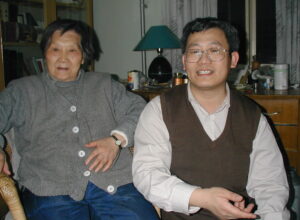
A few years ago, I visited her at the Xinhua dormitory. By then she could barely get around outside — inside her apartment, she essentially crawled to live. But her mind and speech remained sharp. Her immobile legs caused her constant agony, and she spent most of her waking hours wrapping them, layer by layer, in some kind of Chinese herbal bandage, to dull the pain.
As for longevity, she had outlived every rival and every peer. In her own words: "I couldn't beat you, but I could outlive you." I remember when she said that, the two of us burst out laughing.
More than thirty years ago, Miss Wang told me stories of her childhood. Her family lived in Qingdao, with a cook, a gardener, and a housekeeper — a comfortable high-class environment. She had a stern mother she didn't like, but her father adored her. A naval captain, he often took her out to sea. She told me she had been precocious, sensitive, and melancholic from a very young age. She remembered vividly: when she was just four or five, barely old enough to form memories, she stood once on the deck of her father's warship, watching the sunset paint half the sky crimson. A dim sense of life's drifting smallness washed over her — an immense, wordless sorrow — and she wept uncontrollably. Her father couldn't console her, no matter how he tried. So tiny, not yet able to speak in full sentences, yet the philosopical feeling of human insignificance against the infinite universe struck her with piercing clarity. She had also said: "I was born by the sea, and I should return to the sea." The end she had envisioned for herself was to be laid to rest in the ocean, somehow.
From the 1940s onward, when Miss Wang Zhihuan threw herself into the Yan'an revolution, she set out on a path of blood and fire from which there was no return — the path of the "progressive youth." She had been a daughter of the bourgeoisie, educated in fine missionary schools, a dreamer and writer of English verse, sensitive and brilliant, already standing out in college and deeply admired by her foreign professors. She had the chance to study abroad on scholarship, far from her afflicted homeland. But by a twist of fate, the revolutionaries noticed her, and she was drawn into the revolutionary crucible — a life destined for tragedy.
Revolution is not painting or embroidery. Revolution is a meat grinder. A bystander might use majestic words like "epic" and "sweeping." But for someone ground nearly to death in that machine, the view from inside is altogether different. The truth is, after nearly twenty years in a labor camp, even if you survive, you cannot emerge whole. Spirit and body alike bear wounds upon wounds. A good person can be tortured into a paranoiac.
But there is another way of looking at that life choice. Had the progressive youth not thrown herself into revolution — had she instead gone abroad as a young bourgeois — the result would have been a different kind of life: relatively ordinary, materially comfortable (a journalist, a writer, or a translator), in all likelihood just one more face in the crowd. But joining the revolution, and seeing the revolution succeed — apart from being sacrificed to it or fed into the meat grinder — there was indeed the historical possibility of becoming a woman leader of the new China. Had her marriage not ended, with Wang Bingnan's stature (a Party founding elder who had been involved in the Xi'an Incident), the position of his wife would have been only a few steps away from that of First Lady.
Miss Wang once alluded, obliquely, to her awkward position. When Wang Bingnan's German ex-wife arrived in Beijing with their son, Miss Wang, as the lady of the house, took the boy rowing at Beihai Park — she felt reluctant, put-upon, yet compelled to keep up appearances. That was likely one of her efforts to hold the marriage together. As for how the divorce came about, she never once described the process. Besides, I've since learned that the remarriage with Anna never materialized — Wang Bingnan eventually married someone else.
Our teacher's tragic life fulfilled an ancient verse: "The clouds drift out from the mountain caves with no intent; the bird, weary of flight, knows at last to return." Her given name, "Zhihuan," means "knowing to return." She had been weary for so long — but without the long sleep, how could she ever "return"? After the failed suicide attempts of the early 1960s, with no way out, her only road home was to join her father in Hong Kong. "How foolish I was. I got off the train at Shenzhen and just walked straight down the main road — I was nowhere near the border and they intercepted me." A few questions and she was exposed: attempted defection, fleeing to the capitalist free world — a grave crime.
May Miss Wang rest in peace.
---
Miss Wang's Final Days
About Miss Wang's final days, my father made inquiries. He reported:
"I called Miss Wang Zhihuan's caregiver, Jin, today. The old lady passed away on August 16th of the solar calendar. She was at Peking Union Medical College Hospital for three days, unconscious for only one. In the end it was respiratory and kidney failure. She had eaten dinner the night before. She did not suffer much at the end. She had passed her ninety-fourth birthday. Not a single relative came to handle her affairs. There was no memorial ceremony. The Veteran Cadres Bureau managed everything."
"Her dying wish not to be cremated meant nothing — her ashes will be kept for three years. Miss Wang once told her part-time helper that she had a younger sister in Shanghai, a younger brother, and a cousin who had come to visit — but when death came, not one relative appeared. They couldn't be reached while she was alive. I don't know why."
As for refusing cremation — however much she wished otherwise, in modern Beijing, it was unavoidable.
In truth, more than thirty years ago in Anqing, she already felt herself growing old. I remember her choosing a bedsheet — she picked the cheaper, lower-quality one, then said to me: "How much longer do you think I'm going to live? What use is good quality?" She always had one ailment or another, so she never imagined she'd reach such an advanced age. Yet she was meticulous about diet and health. To treat her low platelet count (her skin wouldn't clot easily), she learned that the red skin of peanuts helped — so she made a point of eating a few peanuts at breakfast every day, keeping it up for decades. She guarded her health with cautious diligence. Even at ninety, she told me on the phone that she'd noticed she kept forgetting to salt her cooking lately — but the dulling of her taste buds didn't dampen her pursuit of flavor. Since she ate alone anyway, she'd cook once and eat for several days.
As for her relatives — those she had been close to, those who once kept in touch with — they had all passed away before her. Their children and grandchildren had never known her, had no contact, and never reached out. So the old woman died alone.
Ninety-four years. By traditional Chinese reckoning, that can be called a joyous funeral. Miss Wang, rest in peace.
— Written September 12, 2013
---
Biographical Notes on Miss Wang Zhihuan
Collected from online sources:
Wang Zhihuan, female. From 1938 to 1944, she studied and worked at St. John's University in Shanghai and Jinling College in Chengdu. During this period, when Comrade Wang Bingnan of the Communist Party's foreign affairs association was explaining the truth of the New Fourth Army Incident (Wannan Incident) to the foreign press, he enlisted Wang Zhihuan as translator. It was through this that Wang Zhihuan came to know Wang Bingnan. At the time, Wang Zhihuan had learned from the media about Yan'an's proposals for democratic governance and wished to go there and join the revolution. She visited the Eighth Route Army's Chongqing office for this purpose. Later, in Chongqing, she met Gong Peng, Zhou Enlai's secretary. In September 1945, she arrived in Yan'an to work, serving as a translator in Xinhua News Agency's English department. In 1947, she worked as a translator at the Central Foreign Affairs Group. In Yan'an, she shared a cave dwelling with Wang Guangmei.
(From *The Perils of Obedience*)
Wang Zhihuan loved and composed English poetry from her youth. She joined the revolution in 1947. She translated Chairman Mao's works, worked as an editor, engaged in international literary exchange, and wrote journalistic features. After prolonged hardship, she was politically rehabilitated in the spring of 1985 and retired in 1987.
Wang Zhihuan was born into an official family. Her father was a naval officer in the Nationalist government (online records show he served as a ship captain and director of the Naval Supply Depot). A family of some culture, they gave her a name rich in meaning: *zhihuan* — "knowing to return." Her mother, too, was educated, but was more devoted to mahjong parties with other official wives, emotionally distant from her daughter. The daughter, in turn, looked down on her mother and the other wives' idle, dissipated lives. This, too, was among the reasons she later yearned for Yan'an and threw herself into the revolution.
Wang Zhihuan was a bright and ambitious young woman. She was a top student in the English departments of both St. John's University in Shanghai and Jinling College in Nanjing. She loved writing English poetry and had composed many sonnets during her school years, earning the admiration of her foreign instructors. While at school, she read revolutionary works including *The Communist Manifesto* and *The State and Revolution*, and came to embrace the revolutionary cause. During this period, Wang Bingnan — then head of the CPC Central Committee's international affairs — hired Wang Zhihuan as an English translator. When the Wannan Incident occurred and the Party needed to explain the truth to foreign media, it was again Wang Zhihuan who served as translator. Under the influence of the Communists, Wang Zhihuan decided to go to Yan'an and join the revolution, cutting off ties with her family for this purpose. After arriving in Yan'an, she was assigned to Xinhua News Agency, and it was there that she married Wang Bingnan. In Yan'an, every weekend the Central Auditorium held dances; all the educated young women were expected to attend and dance with the central leadership. Wang Zhihuan danced with Mao Zedong, Liu Shaoqi, and Zhou Enlai. According to her account, Mao was somewhat clumsy at ballroom dancing — not a very good dancing partner.
After entering Beijing in 1949, Wang Zhihuan worked at the Ministry of Foreign Affairs. She had not expected that Wang Bingnan's German ex-wife, Anna, would return with their child, seeking to remarry him. By then, Wang Bingnan was already one of the principal leaders of the Foreign Ministry. Citing considerations of foreign relations, Zhou Enlai personally spoke with Wang Zhihuan, persuading her to divorce Wang Bingnan so that he could remarry Anna. And so, Wang Zhihuan was compelled to divorce Wang Bingnan.
From that point on, Wang Zhihuan was inexplicably transferred from unit to unit. Unable to make sense of it, she swallowed sleeping pills in a suicide attempt that failed. It was the height of the Anti-Rightist Campaign, and she became entangled with the "rightist" label. She was sent down to the countryside, and soon Xinhua found a pretext to transfer her out of Beijing. Cornered and desperate, she thought of the origin of her name — and realized she was herself that weary bird who should fly home. But where was home? In her youth, she had severed ties with her parents for the revolution. During her life with Wang Bingnan in Yan'an, her allergic constitution had caused several pregnancies to end in miscarriage. Now she was utterly alone, and her revolutionary comrades had abandoned her, too. After much deliberation, she decided to seek out her father in Hong Kong. On a rash impulse, she bought a southbound train ticket. She was arrested the moment she stepped off the train in Guangzhou. She said later that she had been unbelievably naïve — she'd imagined she could simply walk from the train station all the way to Hong Kong. After being detained and sent back to Beijing, she was sentenced to ten years for "treason and counterrevolutionary crimes" and dispatched to a labor camp in Anhui. During her imprisonment, she once tried to keep walking south, hoping to reach Yunnan and cross the border from there. But no sooner had she set out than she was caught again. It was not until the end of the Cultural Revolution that she was hired — as a temporary English instructor — by Anqing Normal College in Anhui. The college entrance exams had just been restored, and schools everywhere desperately needed English teachers. Wang Zhihuan, still technically in the labor camp, was dug out by a nearby college to "put talent to its proper use." Only after emerging did she realize: a few months in the cave, a thousand years in the world outside. Urged on by others, she began seeking out old acquaintances, asking favors far and wide, embarking on the long road of petitioning for her political rehabilitation.
Miss Wang's death was a natural end (she passed away in August 2013 at the age of ninety-four). Compared to another woman connected to Wang Bingnan — Guan Lu — she had been relatively fortunate. In retrospect, judging by the timing of Wang Bingnan's abrupt break with Guan Lu "in the name of the revolution" and his subsequent marriage to Wang Zhihuan, Wang Zhihuan filled the emotional gap left after Wang Bingnan's divorce from Anna and the Party's interference in his relationship with Guan Lu. Later, again "in the name of the revolution," Wang Zhihuan was made to yield her place as wife. Can there be anything more ridiculous in this world? The ones sacrificed were always the women — women who had made outstanding contributions to the revolutionary cause, women who would later suffer the most grievous injustices at the hands of their own revolutionary organization. Guan Lu endured a lifetime of suppression and persecution. She struggled through to her political rehabilitation in 1982, but in the end she remained alone and forsaken — clutching a doll to her chest, she swallowed sleeping pills and took her own life. Wang Zhihuan lived to the end.
I think again of her name. She was, truly, a little bird who had flown until she was far too weary — and now, at last, she has flown home to her eternal rest. Rest in peace, Wang Zhihuan.
— From Xu Suizhi's blog
朝华午拾之十二:鸟倦飞而知还
王知还老师2013年8月16日逝世,愿她安息
刚得知,我大学英语老师王知还老人家上个月在新华社去世。最近有网友告知:
"刚向新华社的朋友打听过,老人家已于上个月16日过世……"
终年94。94高龄而去,也算寿终正寝了。但是晚景还是寂寞凄凉,饱受病痛。她最后10年与我老爸一直有联系,寻求老爸在医疗方面的帮助,以减轻病痛。
王老师出身国民党海军军官家庭。自小聪颖伶俐,圣约翰大学和金陵女大高材生,擅长写英诗,她用自己写的十四行诗的诗集作为毕业论文,极受老师和校长吴贻芳的赞誉。上个世纪30-40年代投奔延安,同期去延安的上进革命女青年还包括王光美,两人曾是同室闺友,住在一个窑洞里。王光美嫁的是刘少奇,王老师嫁的是王炳南,也是中共元老。中间经历很多生活与政治的波折及婚变。曾经在延安翻译马列毛,解放后在作家协会和新华社工作,直到因60年代初不堪政治运动的折腾,几度自杀未成,进而企图"叛逃"香港(去投奔父亲)在边境被抓,判刑入狱近20年,最后应聘来我院做我们英文阅读写作课的主讲老师。
几年前去新华社宿舍楼看她,她已经基本不能外出行动了,在室内也差不多是爬行。但是头脑口齿还很清楚。已经难以挪动的双腿带给她很大的痛苦,清醒时大部分时间就是自己用某种中药绷带,一层层缠绕双腿,以减轻痛苦。
她这一辈子,论高寿,已经把对手和同龄人都比过去了,用她自己话说:我斗不过你,可我活得过你。记得当时她说完这句,我和老师都大笑了一场。
在王老师家合影(2005)
30多年前,王老师给我讲述她小时候的故事。她家住在青岛,家里有厨子、园丁和管家,家境很不错。家里有一个严厉的母亲,她不喜欢。但她的父亲非常宠爱她。作为舰长的父亲还常常带她出海。她告诉我,她很小就比同龄人早熟、敏感和忧郁。她还清楚地记得,她四五岁刚记事的时候,有一次在舰艇甲板上,看日落晚霞红遍半边天,就隐约感觉人生的飘摇和渺小,触发一种巨大的悲凉,无可言说,泪如雨下,父亲怎么哄她也止不住她的泪水。那么小啊,连话都说不全,可那种叹人生之渺小宇宙之无穷的感受却是那么真切。她还说过:我是大海边生的,应该回归大海。她当年设想的归宿,是用某种方式葬身在大海。
王知还老师从上个世纪40年代投奔延安,参加革命起,就走上了一条"上进青年"的血与火的不归路。本来是资产阶级家的千金,受过良好的教会学校教育,爱幻想,爱写英诗,敏感聪慧,大学时代就崭露头角,极受外国教授欣赏。曾有机会拿奖学金留洋,远离灾难的祖国。她却阴错阳差被革命党看中,最终投入革命大熔炉,注定了悲剧的一生。
革命不是绘画绣花,革命是绞肉机。作为旁观者,可以用波澜壮阔这样豪迈的字眼,被绞肉机折磨近死的人,完全是另一种心境。事实上,近20年的劳改农场生活,如果幸存,也不可能是完好的人,精神和肉体都是伤痕累累,好人也会折磨成被迫害狂。
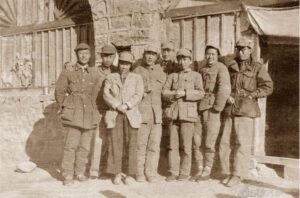
中央外事组(1947年,山西)左起:徐永煐 王炳南 王知还 王朝臣 章文晋 陈家康 吴青 王凝
但对这样的道路选择确实有另一个角度。"上进青年"如果不投身革命,而是小资留洋,其结果肯定是另一种人生,一种相对平凡,物质富足的生活(成为记者、作家或翻译),基本上注定是千万人中的一员。可是参加革命,而且革命成功了,除了为革命而牺牲,被革命投入绞肉机等非人遭遇外,确实也可能成为新中国女性领袖这样的历史机遇。如果没有婚变,以王炳南(曾介入西安事变的中共元老)这样的资格,其夫人的地位与第一夫人也不过几步之遥。
王老师隐约提到过自己的尴尬境地,说王炳南的德国前妻带着儿子来北京时,她作为女主人,带这个孩子去北海划船,感觉勉强无奈又不得不应对场面,这应该是她为保持婚姻做的一个努力。至于怎么离婚的,她从来没提过程。另外,据查与安娜复婚的事情并未成事实,王炳南后来跟另外的人结了婚。
老师悲剧的一生,真是应验了老话: "云无心以出岫,鸟倦飞而知还"(王老师的名是"知还")。其实早就倦了,可是不到长眠"还"得了么?60年代初自杀未遂,不得解脱,唯一的回家之路是投奔在香港的老爸。"我多么傻啊,在深圳下了车居然沿着大路走,离边境还远着呢,就被截留"。几句盘问,就露馅了,企图叛逃,投奔资本主义自由世界,这可是重罪。
愿她老人家安息!
王老师的临终情况
关于王老师的临终情况, 老爸了解了一下,说:
"今天电话王知还保姆金某:老人是阳历八月十六去世的,住协和医院三天,只昏迷一天,最后是呼吸和肾衰竭,前一天晚上还吃饭了。临终痛苦不多。她过了九十四岁生日,后事无一亲属來过问,也没有什么告别仪式,都是老干局代为办理的。
她表示不愿身后火葬的临终愿望,毫无意义,骨灰存放三年。王老师生前跟小时工说过她有妹在上海,也有弟,还有表妹什么人也曾來看她,但临终前后没有一个亲属到场。生前都联系不上,不知何故。"
关于不想火葬,虽然她不愿意,在现代中国的北京,是不可能避免的。
其实30多年前在安庆的时候,她就觉得自己开始老了,记得买一个床单,她选择了较便宜质量不够好的一款,然后跟我说:你以为我还能活多久啊,好质量管什么用。她自己身体一直有这里那里的不舒服,所以自己也从来没想到会高寿。但是,她很讲究饮食和保健。为了治血小板低(皮肤破了不容易凝血),得知花生米的红衣有帮助,她每天早饭就特意吃几颗花生米,一直坚持几十年。她谨小慎微地维护自己的健康。90岁的时候还在电话里说,她发觉近来做菜老忘记放盐,但味觉退化没有让她放弃对口感的追求。她说反正是自己一个人吃,做一次吃好几天。
30多年前,王老师给我讲述她小时候的故事。她的父亲非常宠爱她。作为舰长的父亲常常带她出海。她告诉我,她很小就比同龄人早熟、敏感和忧郁。
至于她的亲属,跟她亲的、曾有走动的,都先她而去了。这些亲戚的后人根本就不了解她,也无任何接触,从不联系。使得老人孤苦离世。
94 高龄而去,按照中国的传统看法,可以算是喜丧了。王老师安息!
记于
2013-9-12
附:从网络上查到的王老师生平等信息。
王知还,女,1938年到1944年,先后在上海圣约翰大学,成都金陵女子文理学院读书、工作。在这期间,共产党外交协会王炳南同志向外国媒体介绍皖南事变的真相时,请王知还作翻译。为此,王知还认识了王炳南。那时,王知还从媒体上知道延安要建立民主政治的主张,想到延安参加革命,为此去过八路军驻渝办事处。后在重庆认识周恩来的秘书龚澎。1945年9月到延安参加工作,在新华社英文部做翻译。1947年曾在当时中央外事组做翻译。在延安和王光美曾住过一个窑洞。
摘自《唯上之灾》
王知还,青少年时期喜爱并习作英诗;1947年参加革命。翻译过毛主席著作,做过编辑、对外文学交流工作、写过新闻特写。经历长期坎坷后,于1985年春平反,1987年离休。
王知还出生于官宦家庭,父亲是国民政府的海军军官(网上查到他当过舰长、海军供给总站站长)。这样的家庭,很有些文化,所以给她起了这样一个寓意深远的名字。她母亲也有文化,但是更热衷于官太太们之间的打牌聚会,对女儿感情淡漠。女儿也看不起母亲和官太太们无所事事的萎靡生活。这也是她后来向往延安、投奔革命的原因之一。
王知还是个聪颖上进的女子。她曾是上海圣约翰大学英文系和金陵女大英文系的高材生,喜欢写英文诗,上学期间就写了不少十四行诗,很受当时外教的欣赏。在校读书时还读了《共产党宣言》、《国家与革命》等革命书籍,向往革命。这期间,中共中央国际事务负责人王炳南聘请王知还做英文翻译,皖南事变发生后,在向国外媒体说明事变真相时,也是请王知还做的翻译。受共产党人影响,王知还决定去延安参加革命,为此和家庭断绝了关系。到延安后,她被分配在新华社工作,并在那里和王炳南结婚。在延安,每个周末中央大礼堂都会有舞会,那些知识女青年都要去和中央领导跳舞。王知还和毛泽东、刘少奇、周恩来都跳过舞。据她描述,毛泽东跳交谊舞比较笨拙,不是很好的舞伴。
1949年进京后,王知还在外交部工作。没料到这时王炳南的德国前妻安娜带着他们的孩子找了回来,要和王炳南复婚。这时王炳南已经是外交部主要领导之一。以考虑对外关系为由,周恩来亲自找王知还做工作,让她和王炳南离婚,以便王炳南和安娜的复婚。就这样,王知还被迫和王炳南离了婚。
从此,王知还被莫名其妙地多次调换单位,她想不通,服安眠药自杀未遂。其时正值反右高潮,又与右派扯上了关系,遂被下放农村,很快又被新华社借故调出北京。走投无路的她这时想到了自己名字的出处,而自己正是那飞倦了的鸟,该回家了。可是家在哪呢?早年为了革命和父母决裂;在延安和王炳南生活期间又因为自己过敏体质几次怀孕都流产了;现在落了个孤身一人不说,革命同志也都把她抛弃了。想来想去决定还是去找在香港的父亲。一念之差,买了张南下的火车票,到广州一下火车便被逮捕。她说她那时真是Naïve到极点。想着下了火车以后就步行走到香港去。哪知道被捕押回北京后即被以叛国投敌和反革命罪判刑十年,押往安徽的一个劳改农场。劳改期间她也曾试图一直往南走,想走到云南,从那里出境。但是刚一出走就又被抓回。一直到文革结束,才被安徽安庆师范学院聘为临时英文教师。那时刚恢复高考,各地高校急需英语教师,还在劳改农场的王知还,被附近高校挖出来"人尽其才"。出来后才知道洞中才三月,世上已千年。经人劝说,遂寻觅故旧,四处托人,开始了漫长的上访平反之路。
王老师的去世还算寿终正寝(2013年8月去世,享年94岁),比起另一位跟王炳南有关的女人关露,她已经幸运了许多。现在想来,根据王炳南"以革命的名义"突然跟关露断交、后跟王知还结婚的时间来看,王知还是填充了王炳南跟安娜离婚、又遭遇组织干涉和关露的恋情期间的情感空挡。后来仍然是"以革命的名义",王知还又让出了妻子的位置。世上真有如此Ridiculous的事情!被牺牲的偏偏都是女人,是对革命事业有杰出贡献的女人,是日后遭受自己的革命组织极为不公平待遇的女人。关露受压抑受迫害一辈子,挣扎到1982年的平反,最终还是孤苦伶仃单身一人,怀里抱着一个洋娃娃,吞服安眠药自尽。王知还活到了最后。
我又想到她的名字。她真是一只飞得太疲倦太疲倦的小鸟,现在总算飞还永久的家了。安息吧,王知还。
摘自徐绥之的博客
From Morning Glory at Noon (朝华午拾). Original Chinese: 朝华之十二: 鸟倦飞而知还.
