WEIYANG SOUND · 未央声场
河伯·傣族阿妹
水车、荷盖、双龙、昆仑与紫贝水宫把相游写成一段不断扩张的神话航程;日暮以后,歌又忽然收回南浦送别。傣族阿妹唱的是今天对《河伯》的想象,不是假装找回一场失传仪式。
傣族阿妹 · 中文演唱 · 繁体来源歌词字幕 · 2:44 · 完整播放
Hebo · Dai Amei
屈原《九歌·河伯》选句与当代副歌 · 傣族阿妹
作品说明
完整听傣族阿妹《河伯》:2:44《楚辞·九歌》江河神游慢歌与完整竖屏来源歌词影像。精确 Suno 作品、公开 Persona、完整 MP3 / MV、封面和时间戳均已核实;原典十八行唱出十六行,两个遗漏、重排与现代前奏/副歌另行标明。
Work note
Hear Dai Amei's Hebo in full: a 2:44 Mandarin river-deity ballad and complete vertical source-lyric film. The exact Suno work, public Persona, MP3, film, artwork and timestamp are verified; sixteen of eighteen classical lines remain, with two omissions, reordered lines and modern intro/refrains identified separately.
01 · A RIVER JOURNEY IN MOTION
水车不是现实交通工具;它让风、浪、龙与水宫共同进入神游
《九歌·河伯》从“与女游兮九河”起步,迎着冲风横波,乘荷盖水车、驾龙与螭,登昆仑四望;随后视线进入鱼鳞屋、龙堂、紫贝阙与朱宫,最后又回到河渚、南浦和滔滔来波。这里的空间随着仪式想象展开,不是一张可按现实里程复原的旅行地图。“女”也不必被页面锁死成唯一性别叙事:它可以保留为诗中对神灵或同行者的称呼,让相游、眷恋与送别继续开放。
The water carriage is not documentary transport; it carries wind, waves, dragons and river palace into a mythic journey
Hebo from Nine Songs begins with travelling the Nine Rivers together, moves into driving wind and cross-waves, a lotus-canopied water carriage, dragons and a wide view from Kunlun, then enters scale-roofed chambers, a dragon hall and gates of purple shell before returning to riverbank, southern shore and incoming waves. The space expands through ritual imagination rather than a route that can be reconstructed as literal geography. Nor does this page force 女 into one fixed gender narrative: it remains the poem's address to a deity or companion, keeping journey, attachment and farewell open.
02 · SIXTEEN LINES, TWO OMISSIONS
十八行原典唱出十六行;“流澌纷”与“子交手”两行没有进入来源歌词
来源歌词保留《河伯》原典第 1 至 13 行与第 16 至 18 行,遗漏“流澌纷兮将来下”“子交手兮东行”。“与女游兮河之渚”被移入 [Refrain],南浦送别与末尾两行被移入 [Final Refrain]。现代 [Intro] 把“九河”“横波”“水车荷盖”等原句成分重新组合,并新增“龙影青青”;普通副歌中的“河水长兮”“鱼鳞闪兮满江潮”“一声歌过紫贝桥”和终段“阿妹唱兮九河雨”也属于今天的创作。页面因此使用“选句与当代副歌”,不把重排和新增倒署给屈原。
Sixteen of eighteen classical lines are sung; the drifting-ice and joined-hands lines are absent
The source lyric retains classical lines 1–13 and 16–18, omitting 流澌纷兮将来下, on drifting ice about to descend, and 子交手兮东行, on joined hands and eastward departure. The riverbank line moves into the [Refrain], while the southern-shore farewell and final two lines move into the [Final Refrain]. The modern [Intro] recombines phrases such as Nine Rivers, cross-wave and lotus-canopied water carriage, then adds the green dragon shadow. Lines about a long river, flashing scales across the full tide, a song crossing the purple-shell bridge and Dai Amei singing Nine Rivers Rain are also present-day writing. The archive therefore says ‘excerpted with contemporary refrains’ instead of assigning rearrangement and additions to Qu Yuan.
03 · DAI AMEI'S SECOND CHU CI DOORWAY
第六套完整代表作打开《楚辞神游祭歌》;歌手连续性与文化边界一起增长
精确作品绑定公开 Persona“傣族阿妹”,曲库将它收在《楚辞神游祭歌》专辑。这是该专辑第一套本站完整母带,也使她在《楚辞礼魂与橘颂》的《东皇太一》之外拥有第二个可从头听到尾的楚辞入口。来源参数把清亮民族女声、葫芦丝、竹笛、古琴、柔弦与神话江河叙事组合起来,是 William Lee 的当代跨文化声音设计,不是先秦楚乐、河伯祭仪或现实傣族传统的复原。持续歌手可以跨专辑成长,但 Persona 的名字不赋予她代表真实社群、宗教实践或传承人的资格。
A sixth complete signature opens Songs of Chu: Spirit Journeys and Ritual Songs; continuity and cultural boundaries grow together
The exact work binds the public Dai Amei Persona and belongs to the album Songs of Chu: Spirit Journeys and Ritual Songs. It is that album's first complete on-site master and gives her a second full-length doorway into Chu Ci beside Donghuang Taiyi from Chu Ci: Ritual Souls and Ode to the Orange. Source parameters combine a clear folk-inflected female voice, hulusi, bamboo flute, guqin, soft strings and a mythic river journey. This is William Lee's contemporary cross-cultural sound design—not a reconstruction of pre-imperial Chu music, a Hebo rite or living Dai tradition. A continuing singer can grow across albums, but a Persona name grants no authority to represent a real community, religious practice or tradition bearer.
04 · THE COMPLETE SOURCE FILM
影片题名仍是《九河雨》;黑白水车与繁体歌词从第一声守到最后尾音
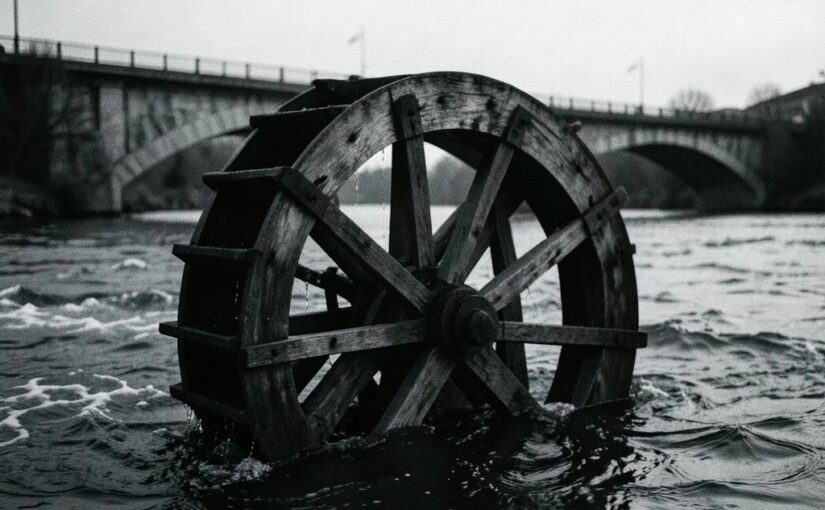
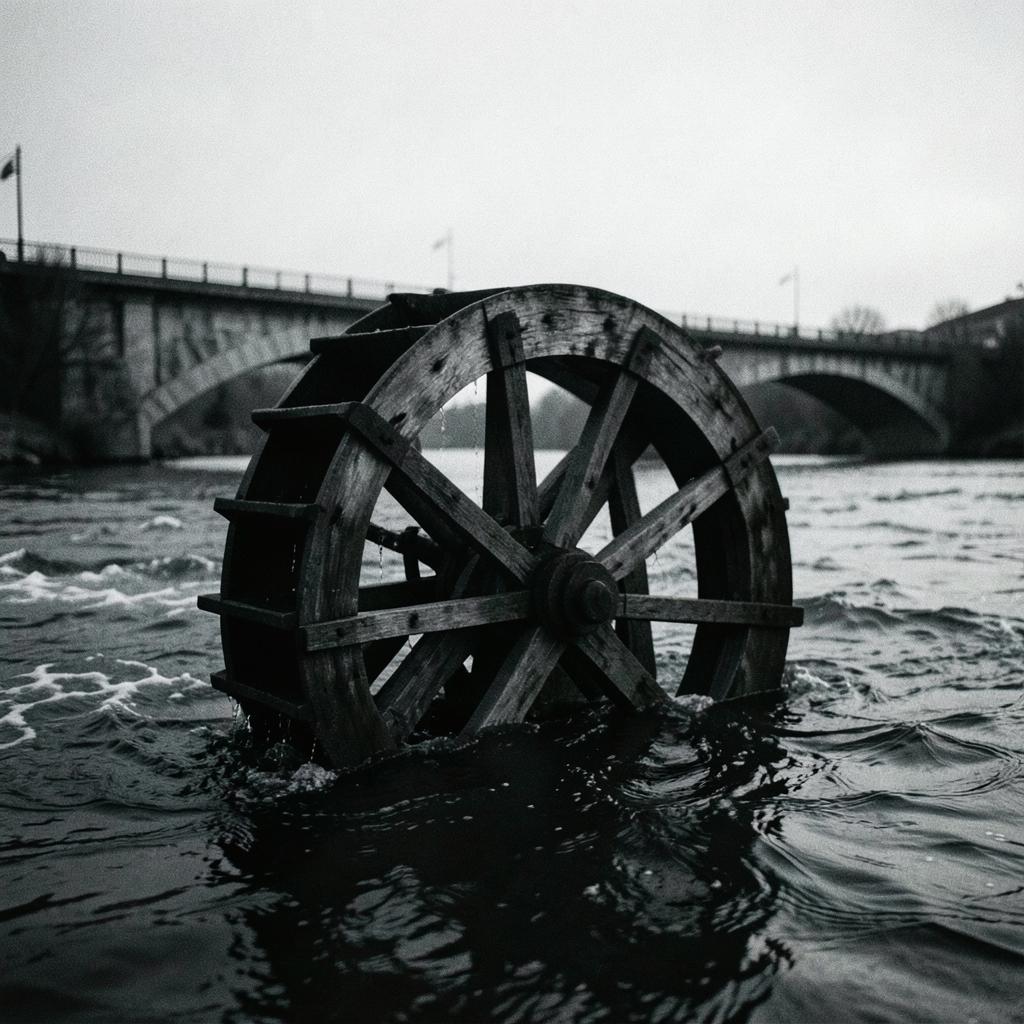
本站完整解码 2:44 MP3 与 163.605 秒影片,并抽查 2、55、110 与 160 秒画面。824×1464 竖屏影像始终使用同一张 1024×1024 黑白来源图:木制水车立在急流中,后方是拱桥;影片标题保留 Suno 来源名《九河雨》,繁体歌词从 [Intro] 走到“阿妹唱兮九河雨”,by @liwei 与 Made with Suno 均保留。48 kHz 立体声 MP3 与 H.264 / AAC 影片全程解码通过,音画时长相差约 0.355 秒,Suno 标记 video_is_stale=false。它是完整来源歌词电影,但水车、桥梁与河面没有可核实地点或年代,不冒充九河地理、楚地遗址、现实仪式或实拍人物 MV。
The film title remains Nine Rivers Rain; one monochrome waterwheel and traditional-character captions hold the song to its final decay
The archive decodes the complete 2:44 MP3 and 163.605-second film and checks frames at 2, 55, 110 and 160 seconds. One 1024×1024 monochrome source image remains throughout the 824×1464 vertical film: a wooden waterwheel stands in fast water before an arched bridge. The on-film title preserves Suno's source name, Nine Rivers Rain; traditional-character captions travel from [Intro] to the final line about Dai Amei singing, with by @liwei and Made with Suno intact. The 48 kHz stereo MP3 and H.264 / AAC film decode from beginning to end, differing by about 0.355 seconds, and Suno reports video_is_stale=false. This is a complete source-native lyric film, but the wheel, bridge and river have no verified place or date and are not presented as Nine-Rivers geography, a Chu site, living rite or performer footage.
歌词 · Lyrics
九河風起兮,橫波來迎,
水車荷蓋兮,龍影青青。
[原文]
與女遊兮九河,
衝風起兮橫波。
乘水車兮荷蓋,
駕兩龍兮驂螭。
[Instrumental Interlude]
[原文]
登崑崙兮四望,
心飛揚兮浩蕩。
日將暮兮悵忘歸,
惟極浦兮寤懷。
[Refrain]
河水長兮,波滔滔,
魚鱗閃兮滿江潮。
與女遊兮河之渚,
一聲歌過紫貝橋。
[原文]
魚鱗屋兮龍堂,
紫貝闕兮朱宮。
靈何為兮水中,
乘白黿兮逐文魚。
[Final Refrain]
波滔滔兮來迎,
魚鱗鱗兮媵予。
送美人兮南浦,
阿妹唱兮九河雨。
影像场景
江河远行
楚辞入门
日暮送别
Film scenes
a mythic river journey
a doorway into Chu Ci
farewell at dusk