WEIYANG SOUND · 未央声场
湄公河的月亮
澜沧江水向南成为湄公河,一轮月亮把竹楼、渡口、船灯和远方的人放进同一封不必寄出的信。歌曲没有替六个国家制造一种声音,而让一条真实跨境河流承载普通人的想念。
傣族阿妹 · 中文演唱 · 一处 Lao 问候语 · 4:08 · 完整播放
Moon over the Mekong
澜沧江—湄公河跨境水路想象 · 当代原创 · 傣族阿妹
作品说明
完整听傣族阿妹《湄公河的月亮》:4:08 中文跨境水路慢歌与完整竖屏歌词影像。精确 Suno 作品、公开 Persona、来源标签、封面和时间戳均已核实;“Sabaidee”只是一处 Lao 问候语,风格标签不冒充现实傣族、老挝或泰国传统。
Work note
Hear Dai Amei's Moon over the Mekong in full: a 4:08 Mandarin river ballad and complete vertical lyric film. The exact Suno work, public Persona, source tags, artwork and timestamp are verified; one Lao greeting and regional colour are not presented as reconstruction of Dai, Lao or Thai tradition.
01 · ONE RIVER, TWO NAMES
澜沧江向南成为湄公河:地理不是异域布景,而是歌的动作
歌词从“澜沧江水往南流”起笔,再在副歌呼唤湄公河。中国外交部与湄公河委员会公开资料把澜沧江—湄公河写作连接中国、缅甸、老挝、泰国、柬埔寨和越南的跨境水系;同一条河在中国境内称澜沧江,向南进入湄公河流域。歌曲把这个真实方向缩成一封月光照亮的信:有人把花别在发上,有人把思念放进船里,“这头”与“那头”因水流而不是国界口号发生关系。它可以被听成跨文化想象,却不能替六个国家发明一种共同民俗或抹平各自语言、历史与生活。
The Lancang becomes the Mekong downstream: geography is the song's motion, not exotic scenery
The lyric opens with Lancang water flowing south, then addresses the Mekong in its refrain. Public material from China's foreign ministry and the Mekong River Commission describes the Lancang–Mekong as a transboundary system connecting China, Myanmar, Lao PDR, Thailand, Cambodia and Viet Nam; the river is called Lancang in China and Mekong downstream. The song reduces that real direction to a moonlit letter: one person places a flower in her hair, another puts longing into a boat, and ‘this shore’ meets ‘that shore’ through current rather than a border slogan. It can be heard as cross-cultural imagination, but it cannot invent one folk tradition for six countries or erase their separate languages, histories and lives.
02 · ONE LAO WORD, A MANDARIN SONG
“Sabaidee”是一声 Lao 问候,不足以把整首中文歌说成多语言传统歌
公开歌词只在前副歌写了一次“Sabaidee”,老挝航空的国家资料把它列作 Lao 语的“Hello”;其余演唱文本是中文。来源创作标签还写出 hulusi、bamboo flute、khene-like reed organ、soft hand percussion,以及 Lao/Thai-sounding vocal ornaments。这里的 like 与 sounding 很重要:它们记录生成时想要的音色联想,不等于使用了经过演奏者核实的老挝笙,也不能证明作品复原老挝、泰国或傣族音乐。本站把这一声问候与中文主体都说清楚,让跨境想象建立在可见的小连接上,而不是靠“东南亚风”四个字吞掉差异。
Sabaidee is one Lao greeting—not enough to label a Mandarin song multilingual tradition
The public lyric uses Sabaidee once in the pre-chorus; Lao Airlines' country information lists it as Lao for ‘Hello.’ The rest of the sung text is Mandarin. Source tags also name hulusi, bamboo flute, a khene-like reed organ, soft hand percussion and Lao/Thai-sounding ornaments. ‘Like’ and ‘sounding’ matter: they record timbral associations requested during generation, not a player-verified Lao khene performance or proof that Lao, Thai or Dai music has been reconstructed. The archive states both the one greeting and the Mandarin centre, allowing a small visible connection to carry the crossing instead of letting a generic ‘Southeast Asian style’ erase difference.
03 · DAI AMEI BEYOND THE FIRST CONTAINER
这是“傣族阿妹边界扩展”,也是她第三套完整代表作
曲库把本作收在“傣族阿妹边界扩展”专辑,精确 Suno 作品又绑定公开“傣族阿妹” Persona。她此前的完整档案分别从周邦彦《苏幕遮》和南朝《西洲曲》进入水边古诗;现在《湄公河的月亮》把清亮女声带到当代原创、跨境河流和一处 Lao 问候。这样的扩展让虚拟歌手拥有可追随的人物成长,而不是每首歌换一个匿名预设。但“傣族阿妹”仍是 William Lee 建立的虚拟主唱身份,不是现实傣族女性、老挝歌者或湄公河流域社群的代表;她越过原先容器时,文化边界也必须一起移动并重新说明。
This is Dai Amei beyond her first container—and her third complete on-site signature
The catalogue places this work in the album Dai Amei: Boundary Extensions, while the exact Suno record binds the public Dai Amei Persona. Her earlier complete dossiers entered waterside poetry through Zhou Bangyan and the Southern Dynasties Xizhou Qu. Moon over the Mekong now carries the clear voice into a contemporary original, a transboundary river and one Lao greeting. That expansion gives a virtual singer a followable character arc instead of replacing her with an anonymous preset on every track. Dai Amei nevertheless remains a virtual lead identity created by William Lee—not a representative of real Dai women, Lao singers or communities across the Mekong basin. When her container expands, its cultural boundaries must move and be restated too.
04 · THE COMPLETE SOURCE FILM
月下水屋与空船唱到“河水会懂你”;完整,但不是湄公河纪录片
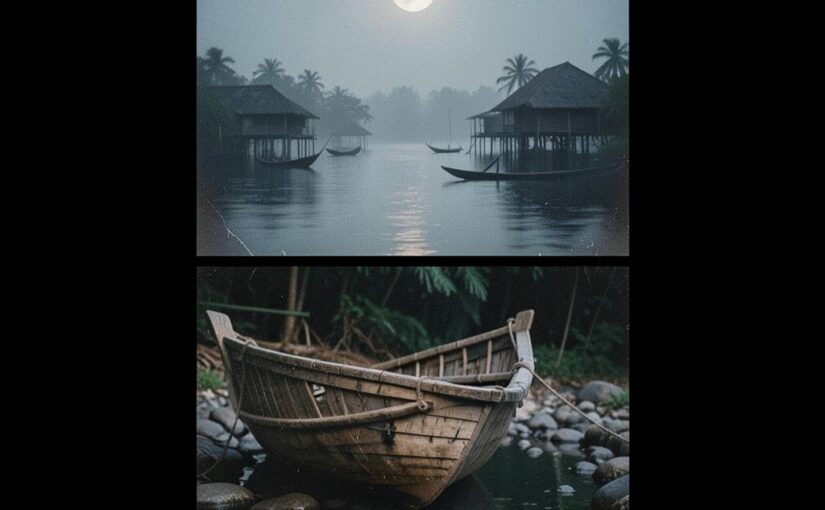
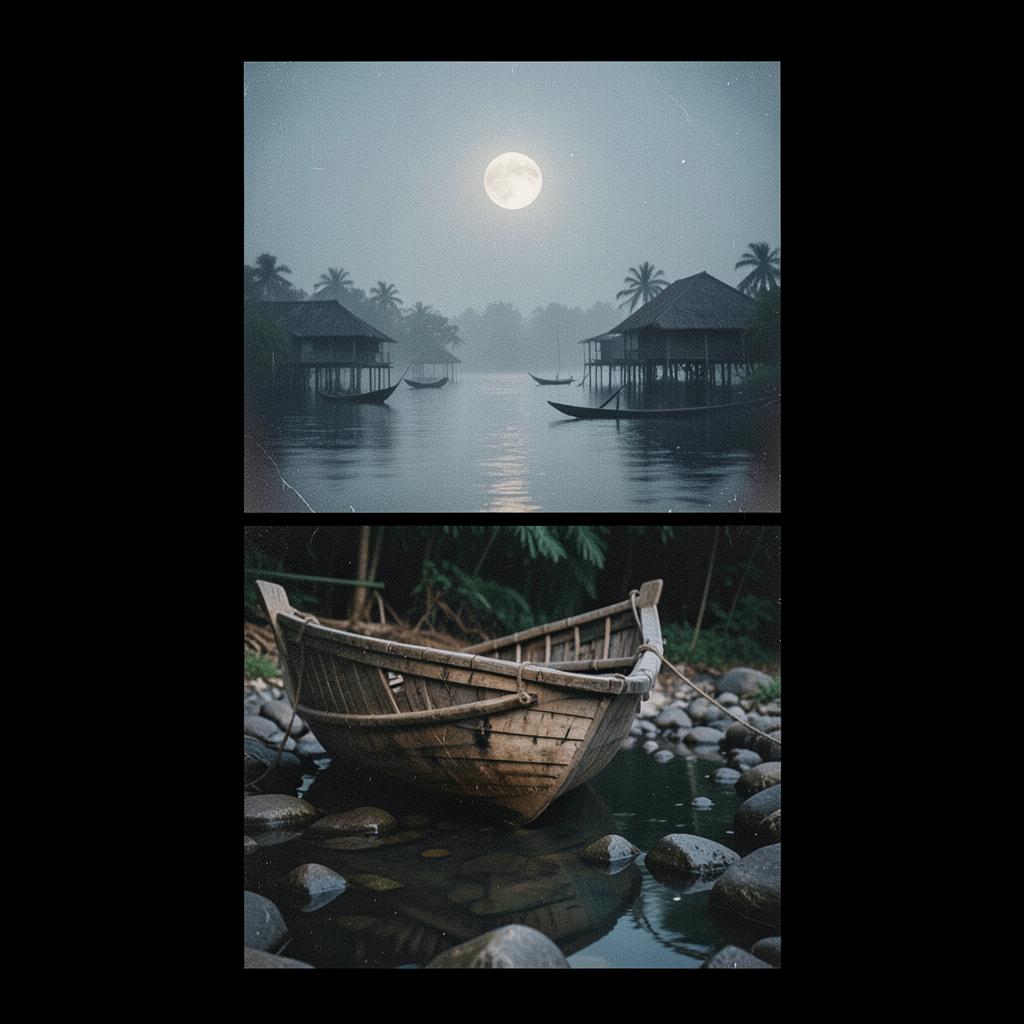
本站完整解码 4:08 音频与影片,并检查开篇、主歌、副歌、桥段和尾声。824×1464 竖屏影像始终使用同一张上下双联封面:上方是月下水屋与小船,下方是石滩上的空木船;歌词从“湄公河的月亮,把一封信照亮”走到“月信不必寄,河水会懂你”。by @liwei、Made with Suno、[Verse 1]、[Chorus] 与 [Outro] 等原生提示仍然可见,音画时长相差约 0.185 秒。它因此是一套完整、可追溯的 Suno 来源歌词电影,却没有可核实的实拍地点、人物表演或民族仪式,不能冒充湄公河旅行纪录、现实竹楼影像、傣族歌舞或 Lao / Thai 文化短片。
Moonlit water houses and an empty boat reach ‘the river will understand’—complete, but not a Mekong documentary
The archive decodes the complete 4:08 audio and film and checks the opening, verse, chorus, bridge and outro. One two-panel source image remains throughout the 824×1464 vertical film: moonlit water houses and boats above, an empty wooden boat on stones below. The lyric travels from ‘the moon over the Mekong lights a letter’ to ‘no moon-letter need be sent; the river will understand you.’ by @liwei, Made with Suno and source cues including [Verse 1], [Chorus] and [Outro] remain visible, while audio and film differ by about 0.185 seconds. This is a complete, traceable source-native Suno lyric film. With no verified live location, performer or ceremony, it is not presented as a Mekong travel documentary, real stilt-house footage, Dai performance or a Lao/Thai cultural film.
歌词 · Lyrics
湄公河的月亮,
把一封信照亮。
[Verse 1]
澜沧江水往南流,
流过竹楼和渡口。
有人把花别在发上,
有人把思念放进舟。
[Pre-Chorus]
Sabaidee,晚风轻轻来,
月亮像你没有离开。
[Chorus]
湄公河,慢慢流,
流过一生的温柔。
我在这头,你在那头,
一首歌就够相守。
湄公河,慢慢流,
流到心上不回头。
若你听见阿妹唱,
请把月光带回眸。
[Instrumental Interlude]
[Verse 2]
船灯一点一点远,
星星一点一点圆。
世界很大,河水很长,
我的歌声很简单。
[Bridge]
不要快,不要响,
让夜色替我们合唱。
[Final Chorus]
湄公河,慢慢流,
流过一生的温柔。
我在这头,你在那头,
一首歌就够相守。
[Outro]
月信不必寄,
河水会懂你。
影像场景
月夜水边
想念远方的人
安静长途驾驶
Film scenes
riverside moonlight
missing someone far away
quiet long-distance driving