WEIYANG SOUND · 未央声场
能不忆江南·傣族阿妹
红胜火的江花、绿如蓝的春水,把记忆从颜色推向杭州月桂、潮声,再落到吴宫酒与双舞。傣族阿妹把白居易三阕《忆江南》全部唱完;同一声反问既是古词的结尾,也成为今天副歌返回旧船与月圆的入口。
傣族阿妹 · 中文演唱 · 繁体来源歌词字幕 · 3:24 · 完整播放
Could Jiangnan Ever Be Forgotten? · Dai Amei
白居易《忆江南词三首》完整十五行、两处版本异文对照与当代副歌 · 傣族阿妹
作品说明
完整听傣族阿妹《能不忆江南》:3:24 白居易《忆江南词三首》完整新唱与全长竖屏来源歌词影像。十五行原词、重复、两处版本异文和当代副歌分别公开;精确 Suno 作品、公开 Persona、完整 MP3 / 影片、封面与作品级时间戳均已核实。
Work note
Hear Dai Amei's Could Jiangnan Ever Be Forgotten? in full: a 3:24 Mandarin setting of all three Bai Juyi lyrics with a full-length vertical source-lyric film. All fifteen classical lines, repetitions, two textual-variant loci and the present-day refrain remain distinct; the exact Suno work, public Persona, complete media, artwork and work-level timestamp are verified.
01 · THREE MOVEMENTS OF MEMORY
江南不是一张风景明信片;三阕词让颜色、杭州声息与吴地重逢逐层靠近
第一阕用“旧曾谙”说明景物早已进入身体记忆,再以江花与春水的强烈颜色收束成反问。第二阕把泛称的江南落到杭州:月中寻桂子是向上看的幽香,枕上看潮头又把远声推入私人夜晚。第三阕转向吴宫、竹叶酒、双舞芙蓉与相逢愿望,让忆景变成忆人、忆宴,也把“何日”与“早晚”留下的未来感接到歌的尾音。页面只从三阕现存文字及其次序出发,不替作品制造确切写作日期、亲历场景或旅游地理证明。
Jiangnan is not a scenic postcard; colour, Hangzhou's sounds and a hoped-for reunion move closer across three lyrics
The first lyric's phrase 'once knew it well' makes landscape bodily memory before river flowers and spring water resolve into a rhetorical question. The second gives Jiangnan a specific centre in Hangzhou: moonlit cassia lifts the gaze while a tide watched from a pillow brings distant sound into a private night. The third turns toward Wu Palace, bamboo-leaf wine, paired dance and reunion, shifting remembered scenery toward remembered people and convivial life. Its when/soon language leaves the future open into the final note. This reading follows the surviving words and sequence rather than inventing an exact composition date, witnessed scene or tourism geography.
02 · FIFTEEN LINES, TWO VARIANT LOCI
三阕十五行全部依次唱出;古词复现、两处版本差异与今天新增各自有名
来源歌词把三阕各五行分别收入三个 [原词] 段,从“江南好”依次唱到“早晚复相逢”,没有删行或调序;[Intro] 先复现首阕前两行,两个副歌和 [Outro] 又把“能不忆江南”带回来。来源作“红胜火”“早晚复相逢”,维基文库《忆江南》独立页与此一致;《白氏长庆集》四库本作“红似火”,《全唐诗》卷八百九十则作“早晚得相逢”,页面因此记录两个版本差异,不擅自判成错字。副歌中的“能不忆江南”仍是白居易原句;“能不忆旧船”“江花红,春水蓝”“阿妹唱到月儿圆”是今天的新增,不倒署给古人。
All fifteen lines remain in order; classical repetition, two textual-variant loci and present-day writing are named separately
The source payload places each five-line lyric in its own [Original Lyrics] block, moving from Jiangnan is good through the closing reunion line with no omission or rearrangement. The [Intro] repeats the first two lines; two refrains and the [Outro] return to Could Jiangnan be forgotten? The source uses 红胜火 and 早晚复相逢, matching Wikisource's standalone text. A Siku edition of Bai's collected works gives 红似火, while Complete Tang Poems volume 890 gives 早晚得相逢, so the dossier records two textual-variant loci instead of silently declaring mistakes. The refrain's 能不忆江南 remains Bai Juyi's line; the old boat, compressed colours and Dai Amei singing toward a full moon are present-day additions.
03 · A NINTH DAI AMEI SIGNATURE
第九套完整代表作打开《傣族阿妹古典水边二》;专辑归档与 Suno 公开字段不混写
精确作品绑定公开 Persona“傣族阿妹”;本站同步曲库把它归入《傣族阿妹古典水边二》,成为该专辑第一套可从头听到尾的本站母带。与此同时,精确 Suno 作品接口的 albums 字段为空,所以页面明确把专辑称为本站来源曲库归档,不声称该曲已经挂入一个公开 Suno 专辑。来源参数把 Jiangnan classical song、Dai water-village ballad、清亮女声、葫芦丝、竹笛、古琴、柔琴与拨弦、江花春水并置,是 William Lee 的当代跨文化声音设计,不是唐代曲调、历史江南声景或现实傣族水乡传统的复原。
A ninth complete signature opens Dai Amei: Classical Waterside II, without confusing catalogue organization with Suno's public album field
The exact work binds the public Dai Amei Persona, while the site's synchronized catalogue assigns it to Dai Amei: Classical Waterside II, making the album's first full on-site master. The exact Suno work currently returns an empty albums field, so the dossier calls this a source-catalogue assignment rather than claiming membership in a public Suno album. Source parameters combine Jiangnan classical song, Dai water-village ballad, clear female vocal, hulusi, bamboo flute, guqin, soft piano and plucked strings, river flowers and spring water. This is William Lee's contemporary cross-cultural sound design—not a recovered Tang melody, historical Jiangnan soundscape or living Dai waterside tradition.
04 · STALE FLAG, PROGRESSING CAPTIONS
Suno 标记影片 stale,但四次抽帧确认字幕实际推进;警告与可见事实同时保留
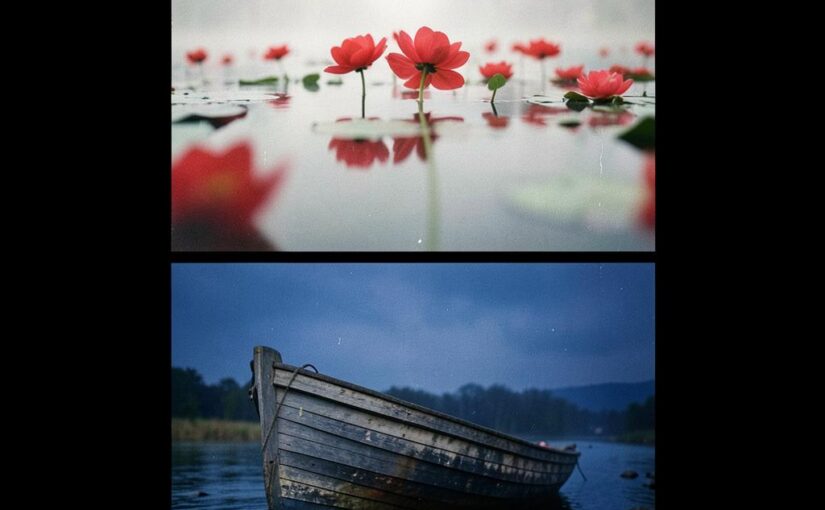
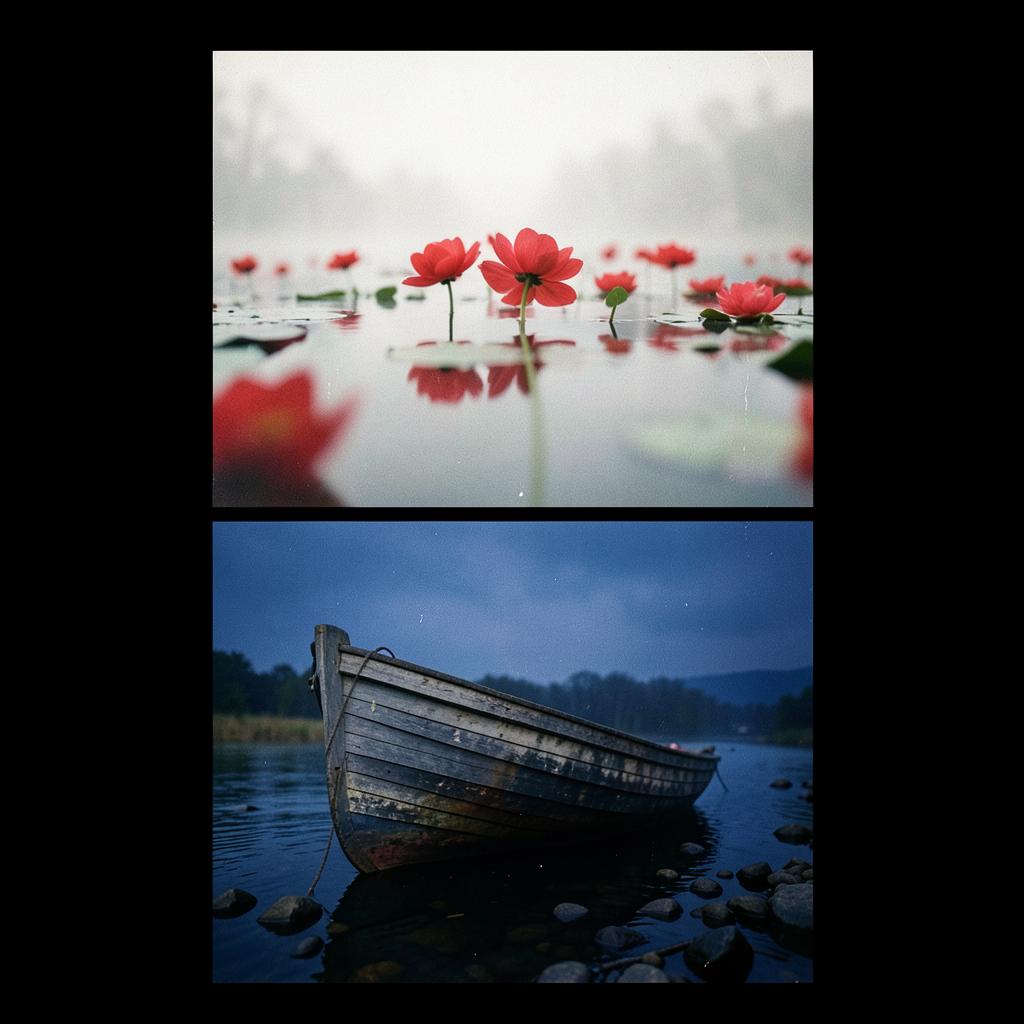
本站完整解码 3:24 MP3 与 204.010 秒影片,并抽查 5、70、140 与 200 秒画面。824×1464 竖屏影像把 1024×1024 来源图装进圆角卡片:上方是水面红花,下方是蓝暗水边的一只旧木船;片上题名《能不忆江南》、by @liwei、繁体歌词与 Made with Suno 均可见。四个时间点分别推进到首阕开头、杭州段末、吴宫段和尾声,因而不能把 video_is_stale=true 机械解释成冻结字幕;本站保留这一提供方状态,同时以实际抽帧说明字幕确有推进。48 kHz 立体声 MP3 与 H.264 / AAC 影片从头到尾解码通过,音画时长只差约 0.310 秒;画面不冒充真实花种、江南地点、古船、历史年代或人物实拍。
Suno marks the film stale, yet four frame checks show progressing captions; provider warning and visible evidence both remain
The archive decodes the complete 3:24 MP3 and 204.010-second film and checks frames at 5, 70, 140 and 200 seconds. The 824×1464 vertical frame places one 1024×1024 source image inside a rounded card: red waterside flowers above, an empty weathered wooden boat beside blue-dark water below. The title, by @liwei, traditional captions and Made with Suno remain visible. The four samples advance from the first lyric to Hangzhou, Wu Palace and the outro, so video_is_stale=true cannot responsibly be translated into frozen captions. The provider flag remains disclosed beside what the sampled frames actually show. The 48 kHz stereo MP3 and H.264 / AAC film decode end to end and differ by about 0.310 seconds; the image is not presented as a verified flower species, Jiangnan location, ancient vessel, historical period or performer footage.
歌词 · Lyrics
江南好,
風景舊曾諳。
[原詞]
江南好,
風景舊曾諳。
日出江花紅勝火,
春來江水綠如藍。
能不憶江南?
[間奏]
[原詞]
江南憶,
最憶是杭州。
山寺月中尋桂子,
郡亭枕上看潮頭。
何日更重遊?
[演唱稿 Refrain]
能不憶江南,
能不憶舊船。
江花紅,春水藍,
阿妹唱到月兒圓。
[Instrumental Interlude]
[原詞]
江南憶,
其次憶吳宮。
吳酒一杯春竹葉,
吳娃雙舞醉芙蓉。
早晚復相逢。
[Final Refrain]
能不憶江南,
能不憶舊船。
江花紅,春水藍,
阿妹唱到月兒圓。
[Outro]
能不憶江南。
影像场景
江花春水
杭州月桂与潮头
吴宫酒与重逢
Film scenes
river flowers and spring water
Hangzhou moonlight and tide
Wu Palace wine and reunion