Morning Glory, Noon Blossom — Chapter 6
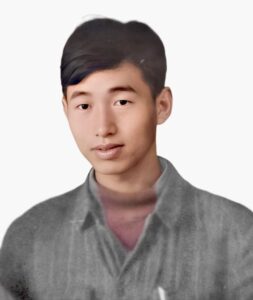
In 2007, while on my way back to visit my alma mater in Vancouver, I received word that my father had suffered a sudden major hemorrhage and was hospitalized for emergency surgery. I was on the other side of the world — helpless, unable to be at his bedside, unable to face the storm together with him. I was consumed by guilt.
My father was the pillar of our family, a man who had weathered every storm life threw at him with remarkable grace. He worked tirelessly his entire life, never truly retiring, sustained by his robust constitution and unshakeable optimism.
Dad always looked remarkably young for his age. I remember when I was starting university, he insisted on escorting me all the way to Anqing. We were the Class of '77, the first cohort admitted after the Cultural Revolution — society had accumulated nearly a decade of aspiring college entrants, so the incoming students spanned a wide age range, including the "old high school graduates" from before the turmoil, some 10+ years my senior. Dad accompanied me to the campus clinic for the new-student physical examination. The nurse pointed at Dad and said to me: "One at a time — wait until he's done, then it's your turn." She had mistaken Dad for a freshman, my peer LOL. That was how youthful and spirited he appeared.
Four years later when I graduated, Dad still couldn't rest easy and chose to come to Anqing to pick me up. He stayed on campus for a week, spending his idle hours playing Chinese chess with my "subordinate" — my lower bunkmate Lao Ding, who always called me his "superior." This bunkmate was from the pre-Cultural Revolution cohort, born in 1949, the same year as New China was born. Watching from the sidelines, Dad — who had graduated in the 1950s — truly seemed like one of our classmates, as if he were simply another member of our generation.
With Dad taking care of everything, I didn't have to worry about a thing. He helped pack my luggage, and after bidding farewell to our classmates and teachers one by one, we said goodbye to Anqing, crossing the Yangtze to catch a long-distance bus home. The ferry was delayed, and a quick calculation told us we were cutting it dangerously close. Miss this bus, and we'd have to return to Anqing for another day. Without a word, Dad hoisted every piece of luggage onto his shoulders the moment we stepped off the ferry and sprinted toward the bus station, half a mile away — charging ahead like a young man. And there I was, a strapping 21-year-old, empty-handed, gasping for breath, left far behind by Dad.
Dad never had the chance to attend a full medical college — he studied at a vocational medical school — yet the heights he reached over four decades of surgical practice are achievements few can rival. His secret? Boldness paired with meticulous care, relentless practice, and an unyielding devotion to study. I remember as children, whenever we came home to find our parents gone, we would always head to the operating room. Dad worked over ten hours a day, and at home he would immediately bury himself in medical texts — I rarely saw him rest. Over the years his reputation spread far and wide, and patients came seeking his care in an unending stream. Even when the relatives of the surgery department head at the next higher level of hospital needed an operation, they would come looking for Dad — only his "knife" gave them true peace of mind.
Doctors were respected, but they were also poor. In the Mao era, wages and prices remained frozen for decades. Dad earned 46 yuan a month, Mother 43 — a family income of 89 yuan supporting six people (including my maternal grandmother), enough for subsistence but little else. Life was hard, but we never thought of it that way. To be honest, we never felt hardship — even though at every meal, a household of that size would have just one or two small dishes to share. Everyone was poor, after all, and plenty of people couldn't even get enough rice to eat, surviving on gruel or dried sweet potato. Father's real dilemma was: where could he find the money to buy books? Those hefty medical tomes — Surgery, Orthopedics, and the like — were frightfully expensive, yet absolutely essential for his work. Who could have guessed that many of those books were purchased with blood Dad sold in secret? Three hundred cc of plasma at a time, at 30 yuan per draw — money that ordinarily would have taken six months to scrape together. One time Mom found out and was furious. Dad was so lean; she feared selling blood would ruin his health. But Dad would always say: the human body has its own hematopoietic mechanism — losing a little blood does no harm. And yet, what other option was there? No matter how refined his surgical skill, it couldn't be converted into cash. I remember that for a missed-meal allowance during surgery, the subsidy was just twenty cents — or sometimes they would provide a free bowl of shredded-pork noodle soup instead, which our parents couldn't bear to eat themselves and would bring home for us children.
Every era has its own way of living. Still, the thought of a celebrated physician, a man who pursued surgical excellence with unrelenting dedication, having no means to own medical books except by selling his own blood — such a thing, in all of history and across all nations, could probably only have happened under Mao. But I cannot say Father missed his era. Measured by professional fulfillment and spiritual satisfaction, that particular time and its particular circumstances gave Dad a rare canvas on which to work. A county-level hospital was like a blank sheet of paper, facing an endless stream of rural patients — people who had always lacked access to medical care and who possessed no financial means. Most such patients, if a county hospital could not treat them, would simply be left to live or die at heaven's mercy. Dad was one of the hospital's founders; he had full autonomy, and as much energy as he could muster translated directly into work — for decades, he performed several surgeries almost every day. I once knew a young rural doctor who, unable to find an outlet for his abilities, grew weary of medicine and switched to studying English education. Yet when the topic of Father's surgical skill came up, he was full of admiration: "Do you know? Your father is the most remarkable surgeon in the world. He can perform major operations that many provincial-level hospitals haven't even begun to offer." He explained some cases to me, which I didn't fully understand, but I knew in my heart that Dad was forever surpassing himself, climbing toward ever more complex surgeries. Later, when I asked Dad about it — which difficult operations he still wanted to attempt but couldn't — he said he had basically done everything within reach, but certain procedures, like microsurgery and limb reattachment, required equipment far beyond what a county hospital could provide. That, he could only regret.
Unlike the old bureaucratic establishments where "without money, don't bother entering," back then even impoverished farmers could afford surgery at the grassroots hospitals. As I recall, minor operations (like appendectomies) cost less than 10 yuan, mid-level operations (gastrectomies and the like) a few dozen yuan, and major procedures (heart, brain) just over a hundred. Of course, scraping together even that sum wasn't easy, but most families managed — by tightening their belts or selling the family pots and pans. The truly destitute could apply for assistance at the civil affairs bureau. This aspect of the pre-reform era deserves recognition. The fundamental reason for such low fees, naturally, was rock-bottom costs: doctors were state cadres on fixed salaries, with no additional expenditures.
Speaking of surgery — my own body bears one of Father's "masterpieces." When I was about ten years old, one morning shortly after breakfast, my stomach suddenly began hurting intensely. Dad came to examine me, pressed on my lower right abdomen, and asked if it hurt. "A lot," I said. He suddenly withdrew his hand, and a searing pain shot through me — tears streamed down my face. Father told me this was called "rebound tenderness," the classic sign of acute appendicitis, and said to prepare for surgery. Before noon he was helping me into the operating room. Having grown up watching operations, I knew an appendectomy was minor surgery and I wasn't afraid at all. But when it actually came time to get on the operating table, I absolutely tried to refuse. I mainly suspected a misdiagnosis — that I'd be cut open for nothing. I'd been perfectly fine that morning, had drunk half a bowl of congee, and I often had stomachaches anyway. This time, without any blood tests or other examinations — just a touch of my abdomen — and that was the diagnosis? The outcome, of course, proved my worries unfounded: the removed appendix was swollen like a little carrot, and because the surgery had been timely, it hadn't yet suppurated. Many surgeons refuse to operate on their own family members, fearing they'll be too tense. But Dad didn't trust anyone else and naturally performed the surgery himself, with Mom assisting at his side.
Normally, using conventional spinal or epidural anesthesia would have allowed a relaxed, unhurried procedure, but Dad, wanting to minimize post-operative reactions, insisted on using only local anesthesia. I could clearly perceive every step of the operation. Most appendectomy incisions are several inches long, but Dad made an opening barely an inch or two on my abdomen — so small that after closing, it required only two stitches, just enough to admit a single finger. What's more, unlike most incisions, Dad used a transverse cut, which added considerably to the surgical difficulty. Dad explained that a transverse cut follows the natural grain of the abdominal muscles, so the scar would be barely visible after healing (he was right — I've seen the scars from vertical incisions, which remain thick, red, and prominent long after healing, sitting there quite unsightly). The operation was a complete success: I went home the same day, and by the next day I could get out of bed and walk about gently. That said, there was a stretch during the surgery that truly hurt — I cried and wailed, which put enormous pressure on Dad. That was when he inserted his finger to try to capture the inflamed appendix. Hardly my fault — an inflamed appendix hurts even when you don't touch it. Fortunately, the pain didn't last long before Dad seized hold of it and quickly administered another dose of anesthetic. Later, Dad admitted that despite all his care, the incision point was slightly off, causing me more suffering than necessary. Being slightly off was no big deal; he could have simply enlarged the incision to compensate. But Dad insisted on the smallest possible opening, unwilling to leave me with a permanent large scar. I told this story to my daughter, and when she found my nearly invisible scar, she exclaimed: "Grandpa did a terrific job!" From then on, whenever her stomach hurt, she would cry out in alarm, suspecting appendicitis, and wouldn't rest until I checked that there was no "rebound tenderness." She even said that if she ever got appendicitis, she'd fly back to find her grandpa — she didn't trust American doctors: how many operations could they possibly have done? Grandpa had performed tens of thousands over his lifetime!
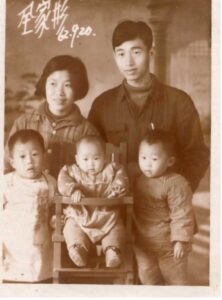
(Family Portrait, 1962)
Dad frequently made house calls to rural clinics and farmers' homes (as an obstetrics department head, Mom did the same). When an emergency demanded surgery, no matter the conditions, he would proceed. No electricity? Gather some flashlights, improvise, set up the operating table — saving the life came first. During the factional fighting of the Cultural Revolution in 1967, the two factions held their separate domains, with frequent clashes and occasional face-to-face combat. In the early days of street brawling, the weapons were still steel bars and cleavers; later they escalated to real firearms. The hospital was semi-paralyzed, located in territory controlled by the "Sweep Faction" — a radical mass organization calling itself the "Sweep the Black Line" group. Ideologically, Dad and Mom probably belonged to the moderate loyalist camp ("loyalist" meaning they opposed the purge of veteran cadres) and leaned toward the "Critique Faction" (the "Critique Alliance Group"), which had a loyalist tilt — though they took no part in its ideological or political activities. The Critique Faction's commander-in-chief had once been our neighbor, a strapping man. I remember that after assuming command, he wore a broad belt around his waist with a Mauser pistol holstered at his side — an image of martial splendor. It was this commander who quietly sent men to bring our entire family into the faction's headquarters; they urgently needed skilled medical hands to treat the wounded from the fighting. And so Dad set up a wartime surgical theatre — not unlike Dr. Norman Bethune's field hospital — and saved many lives.
In peacetime, the county hospital's white ambulance carried Dad, Mom, and our childhood to every corner of the county. When destinations were close, they would walk or bicycle to their patients. I remember when I was six or seven, our entire family moved to Hewan, a remote rural town, to support the village hospital for a year. Dad often bicycled out on night calls, sometimes taking me along. The sky was always so dark, and the route invariably passed through one or two cemeteries, the cold wind whistling overhead. Entering a village, we would hear dogs barking in waves. I would hide in Dad's arms on the front seat, often too frightened to open my eyes. After the treatment, beneath the dim glow of an oil lamp, the host would always cook two eggs in brown-sugar water and serve them steaming hot as a token of gratitude. Then, lighting the way with a flashlight, they would see us off — and I would be sound asleep long before we got home.
I was never very robust as a child, but at home I was sensible beyond my years — I would often volunteer to sweep the floor and wash the dishes. At school my grades were good, and I was the delight of my parents' hearts. At every major step of my life, from being sent down to the countryside to the oral examination for college entrance, from university registration to graduation and then graduate school interviews — until I was married and had a family of my own — Dad was always there, escorting and protecting me. Now that Dad had fallen ill, I was in a foreign land, unable even to bring him a cup of tea or water, unable to fulfill the most basic filial duties. Whenever I dwell on this, grief wells up from deep within.
But misfortune can turn into blessing. Dad's sudden illness led to early diagnosis and timely treatment, which was in his favor. What gives me comfort is that Dad received the best possible medical care, and most of the family was at his side looking after him. He recovered swiftly after the surgery, and the strength in his voice reassured everyone.
Dad is now semi-retired at home, still living modestly. He shows none of the signs of a man in his eighties — his life is orderly, his health robust, and he retains an eager curiosity for new things, handling a computer more adeptly than many young people. Beyond effortlessly consulting English-language medical literature, he has built up an English vocabulary over the years through extensive reading that rivals my own, even though I'm a "trained linguist." That his children have each found their own successful path is his greatest comfort. And the little stories of his grandchildren's growing up bring him abundant joy.
爸爸保重
朝华午拾 · 第六章
2007年我正在回访温哥华母校的路上,得知老爸突然大出血住院,行大手术。我远在天边,爱莫能助。无从床前伺候,共同面对风雨,深感愧疚。
父亲是我们全家的主心骨,大风大浪闯过来,人生很精彩。父亲操劳一辈子,一直退而不休,仗的就是身体好和心态好。
父亲比同龄人显得年轻很多。记得我上大学的时候,父亲不放心,一路送我到安庆。我们77级是文革后第一届大学生,社会上积压了近10年的高考大军,所以新生的岁数相差很大,包括一批被文革耽误的老三届高中生,比我年长10岁左右。父亲陪我到学校医务处做新生体检,护士指着我跟父亲说:一个一个来,等他检查完了,你再来。她把父亲当作新生了,可见父亲的年轻精神。
四年以后我毕业了,父亲还是不放心,来安庆接我,在学院住了一周,没事就跟我的"老下级"(我的下铺,因此总叫我"老上级")下象棋。老下级是老三届,49年生人,与新中国同岁。从旁观看,50年代就毕业的父亲真地象我们同学一样,仿佛我们中的一员。
有父亲照顾,我什么都不操心。父亲帮助把行李打包,我们与同学老师一一道别,就跟安庆说再见了,过江去赶长途公共汽车回家。轮渡误点了,一算时间非常紧张,一旦错过这班车,就不得不回安庆又耽搁一天。父亲二话不说,下了轮渡,把大小行李扛上,冲也似地往一两里外的汽车站赶,跟个小伙子一样。可怜我21岁正当年,空着手却气喘吁吁,被父亲远远抛在后面。
爸爸没有机会进入医学院,上的是医专,可他行医四十年所取得的成就,达到的高度,是常人难以企及的。靠的是,胆大心细,勤于实践,刻苦钻研。记得我们小时候,回家不见父母,总是到手术室去找。爸爸每天工作十多个小时,回家也是一头扎到医书里,很少见他休息。多年下来,名震四方,求医者络绎不绝。甚至上一级医院外科主任的亲属需要手术,也来找爸爸"这把刀"才觉得放心。
医生受人尊敬,但却是清贫的。在毛泽东时代,工资和物价均几十年不动。爸爸46元,妈妈43元,家庭收入89元一月,维持一家六口(加上外祖母)温饱,难有积余。生活苦点,倒也无所谓。其实我们从来也没有觉得苦,尽管每餐饭,一大家人才有一两碟小菜。反正大家都苦,还有很多人吃不饱饭,只能喝粥、吃红薯干呢。爸爸的难题是,到哪里去攒买书的钱呢?那些大厚本的专业书籍《外科学》、《骨科学》等,定价不菲,却是工作必不可少的。谁能想到,许多医书是爸爸瞒着家人卖血换来的。一次300cc血浆,当时的价格30元,这可是平时半年也难攒下的钱啊。有一次,妈妈发现以后非常生气。爸爸很清瘦,担心他卖血损害了身体。可爸爸总是说,人有造血机制,失点血无碍。不过,除此之外,还有别的办法么?医术再精湛,也变不了钱。记得手术误餐,当时的补贴也才两角,或者供应一碗免费肉丝面(爸爸妈妈舍不得吃,常常带回家给我们孩子吃)。
一个时代,一种活法。可是,一个享有盛誉、对医术精益求精的医生非卖血不能拥有医书,这样的事古今中外,大概也只有毛时代了。不能说,爸爸没有赶上好时代,从事业的追求和精神的满足看,那个特定的时代特定的条件,给爸爸一个难得的施展空间。基层县医院象一张白纸,面对的是源源不断的一向缺医少药、经济能力匮乏的农村患者。多数这样的患者基层医院不能救治,也就只好自生自灭,听天由命了。爸爸是医院的开创者之一,有充分自主权,有多大精力就有多少工作,几十年来几乎每天都有几台手术。我当年认识一位农村青年医生,由于不能施展,而厌倦行医,转报英文师专,当谈起爸爸的医术,却充满钦佩:"你知道么?你爸爸是世界上最了不起的医生。许多省立大医院尚未开展或普及的大手术,你爸爸也能做。"他给我讲解一些案例,我也不懂,但是心里明白,爸爸一直在超越自己,向越来越复杂的手术攀登。后来,跟爸爸谈起来,还有哪些疑难手术,想做而做不成。爸爸说,能做的差不多都做了,但是有些手术,比如显微外科,断肢再植等,对于器械要求太高,县医院没有这种条件,只好遗憾了。
跟"有理无钱莫进来"的衙门不同,当年在基层医院贫苦农民也能开得起刀:印象中小手术(阑尾摘除等)收费不到10元,中等手术(胃切除等)收费几十元,大手术(心脏、脑等)也不过百元。当然,凑足这钱也不容易,但是为看病节衣缩食,或砸锅卖铁,多数人还是想出了办法。对于特困户,可以到民政局申请补助。改开前时代的这一点,还是值得称颂的。收费低廉的根本原因,当然是成本底:医生是国家干部,拿固定工资,没有额外支出。
说到手术,我的身上也留有爸爸的"杰作"。我十岁左右,有一天早饭不久,突然肚子疼得厉害。爸爸过来检查,按住右小腹,问疼不疼,我说,"很疼"。他突然把手抽回,我一阵剧痛,眼泪都出来了。爸爸告诉我,这叫"反跳痛",是急性阑尾炎的典型症状,说准备开刀,不到中午就扶我进了手术室。从小看惯了开刀,知道阑尾摘除是小手术,我一点也不怕。可真要上手术台了,我却怎么也不愿意。主要是怀疑弄错了,白挨刀了。早上还是好好的,喝了半碗粥,我平时也常闹肚子疼,这次,也没有验血或做其他检查,摸摸小腹,就这样确诊了?结果自然是我多虑,割下的阑尾肿得象棵小胡萝卜头,因为手术及时,还没有化脓。不少外科大夫不给自己亲人开刀,怕太紧张。可爸爸不放心别人,理所当然亲自动手,妈妈在旁做助手。本来,如果使用常规腰麻或硬膜外麻醉,也可从容不迫,但爸爸为了术后反应小,坚持只使用局部麻醉,我能清楚知道手术的每一个过程。多数同类手术刀口总有几寸,可爸爸只给我开了一条一两公分的小口子(关腹后只缝了两针),刚够伸进一个手指。这还不算,跟多数刀口不同,爸爸用的是横切,这更增添了手术难度。爸爸说,横切符合人的腹部的自然纹路,愈合后刀疤不显(确实如此,我见过其他竖切手术的刀痕,愈合后很久仍然粗粗红红地立在那儿,很难看)。这次手术很成功,我当天回家,第二天就可下床轻微走动。不过,手术中有一阵确实很疼,我大哭大叫,给爸爸增加了很大压力。那是爸爸伸进手指试图捞取发炎的阑尾时。也不怪,阑尾发炎,不碰它尚且疼痛得很呢。好在疼得时间不长,爸爸就逮住了它,赶紧补上一针麻醉。后来,爸爸说,尽管费了心思,下刀之处还是略偏了点,使我多受了一些苦。偏一点没关系,如果把刀口加大点,也好办,可爸爸坚持尽可能小的口子,不愿意让我落下一个永久的大疤痕。我把这个故事讲给女儿听,她找到我的几乎看不见了的刀口,惊叹:"Grandpa did a terrific job!"。从此,她肚子一疼,就大叫,怀疑得了阑尾炎,非让我检查发现没有"反跳痛"才安心。还说,她要是得了阑尾炎,就飞回去找爷爷,可信不过美国的大夫:他们才开过几个刀,我爷爷一辈子开刀何止成千上万!
爸爸常常出诊到农村医院和农民家中(作为妇产科主任,妈妈也一样)。遇到急诊需要手术,不管什么条件,也要进行。没有电,就集中一些手电筒,因陋就简,搭起手术台,救命要紧。文革武斗那年(1967年),两派割据,常有摩擦,亦有短兵相接的时候:初期街头械斗,用的还是钢钎菜刀之类,后期可用上了真枪真炮。医院处于半瘫痪状态,并且地处"扫派"(叫"扫黑线",一激进派群众组织)掌控辖区。爸爸妈妈思想上大概属于温和保皇派("保皇"即反对揪斗老干部),倾向有保皇色彩的"批派"(叫"批联部"),但并不参与其意识形态和政治生活。批派的总司令曾是我家的邻居叔叔,身材魁伟。印象中担任司令以后,他腰扎宽皮带,挎盒子枪,好不英武威风。是总司令派人悄悄把我们全家请到这一派的大本营里,他们急需医疗好手救治武斗中的伤员。于是爸爸搭起战时手术台,就跟白求恩的战地医院似的,也救了不少人的命。
和平岁月,县医院那辆白色救护车,载着爸爸妈妈和我们的童年跑遍了全县每一个角落。如果路近,也步行或骑自行车出诊。记得我六七岁的时候,全家去偏远乡镇河湾,支援农村医院一年。爸爸晚上经常骑车出诊,有时也带着我。天总是那样黑,也总要经过一两个墓地,头顶冷风飕飕。进入村子,总有此起彼伏的狗吠声。我躲在车前座爸爸怀中,常常不敢睁开眼睛。看完病,在昏黄的油灯下,主人总要用红糖水煮两个鸡蛋,热气腾腾端上来,款待我们。然后,照着手电,送我们上路,而我不等到家,就已经睡熟了。
我从小身体不大好,小时候在家很懂事的样子,常主动要求扫地洗碗,在学校成绩也好,很讨爸爸妈妈的欢心和疼爱。直到结婚成家前,我生活的每一大步,从下乡插队到高考口试,从大学报到到毕业离校再到研究生面试,都有父亲陪同呵护。如今父亲病倒了,我却远在异国他乡,不能端茶递水,略尽孝道。每念及此,不由得悲从中来。
坏事变好事,父亲这次急病倒下,对病情的早期诊断和及时治疗有利。得以宽心的是,父亲得到了最好的医疗条件,家人也多在身边照顾。父亲术后恢复很快,说话很有底气,全家人都松了口气。
爸爸现在半退休在家,依旧清贫。一点不象80多岁的老人,生活有条不紊,身体健康,仍保持对新事物的好学之心,电脑玩得比许多年轻人还熟。除了熟练查阅英文专业资料外,长年博文强识,普通词汇量跟我这英语"科班"出身的也有一比。子女各自发展,是他最大的安慰。孙儿辈的成长花絮,更给他带来欢乐。
